


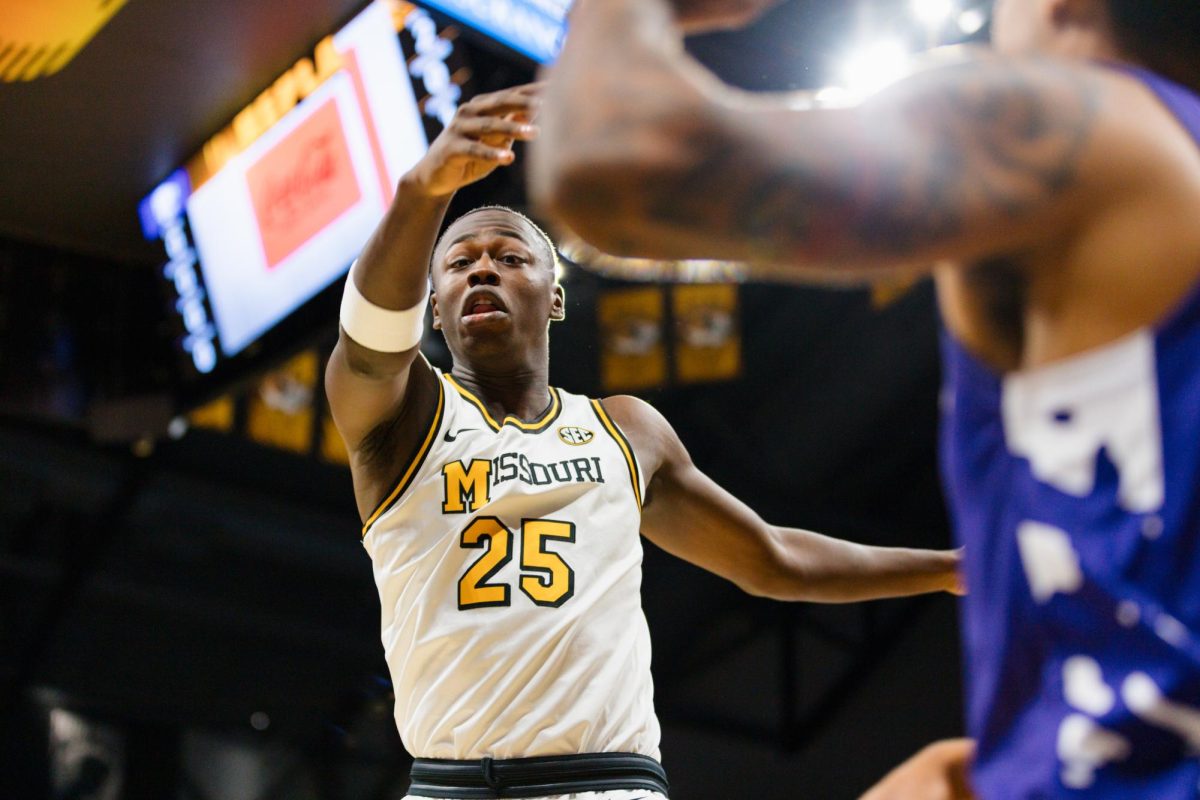
Missing out on Mark Mitchell was undoubtedly a frustrating moment for Kentucky fans.
The Wildcats appeared to have landed the experienced forward after a wild sequence involving eligibility rulings, court action and a transfer-portal opportunity. But Mitchell ultimately chose to return to Missouri, leaving Big Blue Nation wondering what could have been.
Now, however, there may be another way to look at the situation.
What initially felt like a major recruiting disappointment could have spared Kentucky from becoming entangled in one of the most complicated legal battles currently shaking the SEC.
The college sports landscape has become increasingly unpredictable since the NCAA introduced its “5-years-to-play-5” eligibility framework. Dozens of lawsuits have been filed challenging eligibility rules, creating situations that would have been almost impossible to imagine just a few years ago.
And Kentucky’s situation with Mitchell was happening right in the middle of that chaos.
The LSU Situation Changes Everything
The biggest concern centers around Louisiana and a state-court ruling that opened the door for more than 40 athletes to receive an additional year of college eligibility.
Some of those athletes had already entered professional sports, signed professional contracts or participated in NFL preseason games.
A Baton Rouge judge initially prevented the NCAA from enforcing its eligibility restrictions against former professional athletes attempting to return to college sports.
The situation then expanded.
The same court later accepted an amended complaint challenging the SEC’s ability to enforce its own restrictions involving professional athletes. That decision created another layer of uncertainty for the conference.
LSU has indicated that it intends to comply with the court’s ruling, potentially allowing former professionals to join its roster.
That decision has reportedly infuriated several other SEC programs.
The SEC Could Fight Back
According to reporting from Yahoo Sports’ Ross Dellenger, officials from the other SEC schools have discussed several extraordinary options for dealing with the situation.
Those possibilities reportedly include boycotting games against LSU, placing the Tigers on probation, pursuing a federal legal challenge and, in the most extreme scenario, exploring whether LSU could be removed from the conference.
That would be an extraordinary development for the SEC.
The conference’s bylaws do give its presidents and chancellors significant authority when dealing with member institutions. Under the conference’s governing rules, league leadership can impose penalties it considers appropriate and can restrict a school’s participation in championship competition.
Whether any of the most drastic options would actually happen remains uncertain.
But the fact that they are reportedly being discussed demonstrates just how serious the situation has become.
Why Kentucky’s Mitchell Situation Suddenly Looks Different
This is where the Mark Mitchell saga becomes particularly interesting for Kentucky.
The Wildcats were caught in the middle of an eligibility environment that was changing almost by the day. Mitchell received a pathway to continue playing, Kentucky became involved, and the situation eventually opened the door for him to remain at Missouri.
From Kentucky’s perspective, losing a player who could have contributed roughly 13 points and five rebounds per game obviously hurts.
But there is another side to the story.
Kentucky ultimately avoided becoming deeply involved in the larger SEC-versus-LSU confrontation.
Instead of having to navigate another complicated eligibility dispute while preparing for the season, Mark Pope and his staff can focus on the roster already assembled in Lexington.
That doesn’t make losing Mitchell irrelevant.
It simply changes the perspective.
Kentucky May Have Avoided an Even Bigger Headache
The SEC’s current situation could become a major test of how much authority conferences actually have over their members in the modern college-sports environment.
If one school can successfully use a state-court ruling to circumvent a conference-wide restriction, other programs could potentially attempt similar strategies.
That could create an enormous challenge for conference governance.
There is also a legal precedent that could influence how the SEC responds.
Earlier this year, the Big 12 pursued federal litigation involving Texas Tech and quarterback Brendan Sorsby, seeking to prevent the school from using a player who had admitted to gambling on games while at Cincinnati.
The Big 12’s aggressive legal strategy ultimately helped lead to Texas Tech separating from Sorsby.
The SEC could now find itself considering a similarly forceful approach.
For Kentucky fans, the lesson may be simple: sometimes a recruiting loss isn’t necessarily a disaster.
Mitchell would have added proven production and experience to Mark Pope’s roster, and there is no denying that his return to Missouri was disappointing.
But given the legal uncertainty surrounding eligibility and the escalating conflict between LSU and the rest of the SEC, Kentucky may have accidentally avoided a much larger problem.
What looked like a painful recruiting miss could ultimately turn out to be a fortunate escape.
