


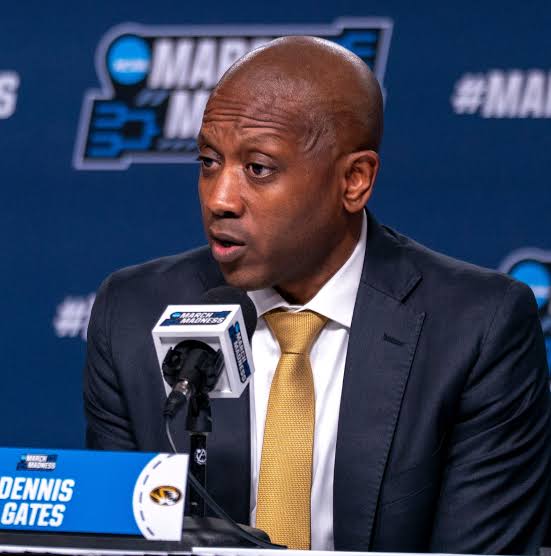
The Mark Mitchell saga has taken yet another dramatic turn, and this time, Missouri head coach Dennis Gates is at the center of the conversation.
After Mitchell’s stunning decision to leave Kentucky and return to Missouri, attention immediately shifted toward Gates and what the Tigers’ head coach would have to say about getting one of his most important players back.
For Kentucky, the development was a major disappointment. For Missouri, it was a completely different story.
Mitchell’s return gives the Tigers an experienced SEC forward who already knows the program, the conference and Gates’ system.
A shocking reversal
Just days earlier, it appeared Mitchell’s future was in Lexington.
Kentucky had emerged as the winner of a complicated transfer situation, and Big Blue Nation was preparing to see Mitchell in a Wildcats uniform.
Then the entire situation changed.
Mitchell ultimately decided to return to Missouri, instantly transforming the story from a Kentucky recruiting victory into one of the biggest reversals of the offseason.
The decision also created plenty of questions.
Why did Mitchell change his mind? What ultimately convinced him to return to Columbia? And what does his decision mean for both programs?
Those questions have made Gates’ reaction especially important.
Gates gets a major piece back
From Missouri’s perspective, bringing Mitchell back could be enormous.
The forward already demonstrated his ability to produce at the SEC level, averaging 16.1 points and 4.9 rebounds per game during his previous season with the Tigers while shooting 38.8% from three-point range.
Those numbers explain why Kentucky wanted him so badly.
Now, instead of preparing to defend Mitchell, Missouri gets to put him back into its own lineup.
For Gates, that changes the outlook considerably.
The Tigers not only regain a proven scorer but also add a player who understands the demands of playing in the SEC.
Kentucky is left with questions
Mark Pope and Kentucky, meanwhile, have been forced to move forward without the veteran forward they believed they had secured.
There is no question Mitchell could have strengthened the Wildcats.
His experience and scoring ability would have given Kentucky another reliable option against the conference’s elite teams.
But the roster-building process does not stop because one transfer decision changed at the last minute.
Kentucky must now focus on the players already in Lexington and determine how to replace the production it expected Mitchell to provide.
The rivalry just became more interesting
Mitchell’s return also adds another layer to the SEC rivalry.
If Kentucky and Missouri meet during the upcoming season, Mitchell could find himself facing the program he had briefly committed to.
That possibility alone is enough to make the matchup far more intriguing.
For Gates and Missouri, the goal is now simple: turn Mitchell’s return into production on the court.
For Kentucky, the challenge is equally clear: prove that losing Mitchell does not derail the Wildcats’ season.
The transfer saga may finally be over.
But the real story begins when Mitchell puts on a Missouri uniform again.
And if Dennis Gates can get the best version of his returning star, Kentucky may eventually discover just how costly this particular recruiting loss could become.
