


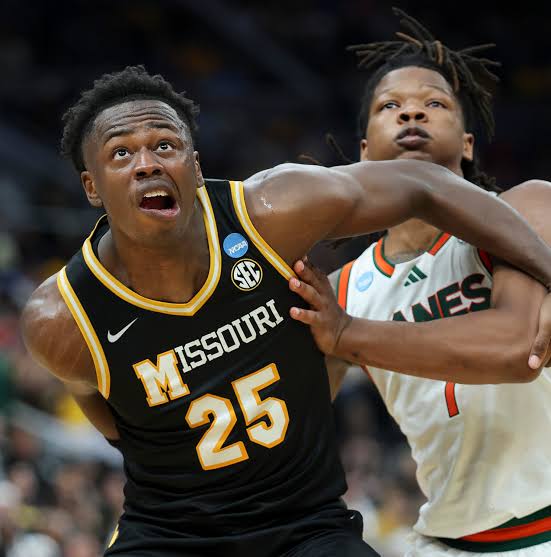
The Mark Mitchell saga has already taken Kentucky fans on a wild ride.
First, the veteran forward appeared to be heading to Kentucky. Then, after a whirlwind of eligibility and transfer developments, Mitchell ultimately decided to return to Missouri.
For Big Blue Nation, the reversal was frustrating enough.
But now the situation has become part of a much larger SEC story, with the conference facing difficult questions about eligibility rules, court orders and how much authority it actually has over its member schools.
And this time, the SEC can no longer simply sit back and watch.
Mitchell’s situation was bigger than Kentucky
When Mitchell initially committed to Kentucky, the Wildcats appeared to have solved one of their biggest offseason needs.
The experienced forward had spent time at Duke before transferring to Missouri, where he established himself as a productive SEC player. His return to the conference made him an attractive addition for Mark Pope.
But the circumstances surrounding his eligibility quickly became complicated.
A court ruling in Kentucky granted additional eligibility to a group of athletes, creating another opening for players affected by the NCAA’s changing eligibility rules. Mitchell was among those who benefited from the legal developments.
That eventually created a path for him to transfer to Kentucky.
Then came the reversal.
Mitchell chose Missouri.
While Kentucky fans understandably focused on the player himself, the bigger story was already developing behind the scenes.
LSU has pushed the issue to another level
The latest SEC controversy centers on a Louisiana court ruling that granted additional eligibility to more than 40 athletes.
Some of those athletes had already signed professional contracts or participated in professional sports.
The Baton Rouge ruling restricted the NCAA from enforcing certain eligibility rules against those former professionals.
LSU has indicated that it will comply with the court’s decision.
That has reportedly created serious frustration among the other SEC programs.
The conference now faces a difficult choice: allow individual schools to operate under conflicting court rulings or fight back and attempt to preserve its ability to enforce league-wide rules.
The SEC could take unprecedented action
According to Yahoo Sports’ Ross Dellenger, officials from the SEC’s other 15 universities have discussed aggressive responses to LSU.
Potential options reportedly include boycotting games against the Tigers, placing LSU on probation, pursuing a federal legal challenge and even exploring whether LSU could be removed from the conference.
Any of those outcomes would dramatically escalate the situation.
The SEC’s bylaws give its presidents and chancellors broad authority to impose penalties on member institutions, including restricting participation in championship competition.
That means the conference has significant tools at its disposal if it decides LSU has crossed a line.
What this means for Kentucky
For Kentucky, the Mitchell saga now looks very different.
The Wildcats certainly wanted Mitchell, and there is no question he could have helped Mark Pope’s roster.
But Kentucky is no longer responsible for navigating the uncertainty surrounding his transfer.
Mitchell is back at Missouri, while Kentucky can concentrate on its own roster and the upcoming season.
The Wildcats may have lost a player they wanted.
But they may have avoided becoming entangled in a much larger SEC battle.
And with the conference now facing a potentially historic fight over eligibility and its own authority, the Mark Mitchell story may prove to be only one small chapter in a much bigger saga.
The SEC has finally been forced to respond.
And this story may be far from over.
