


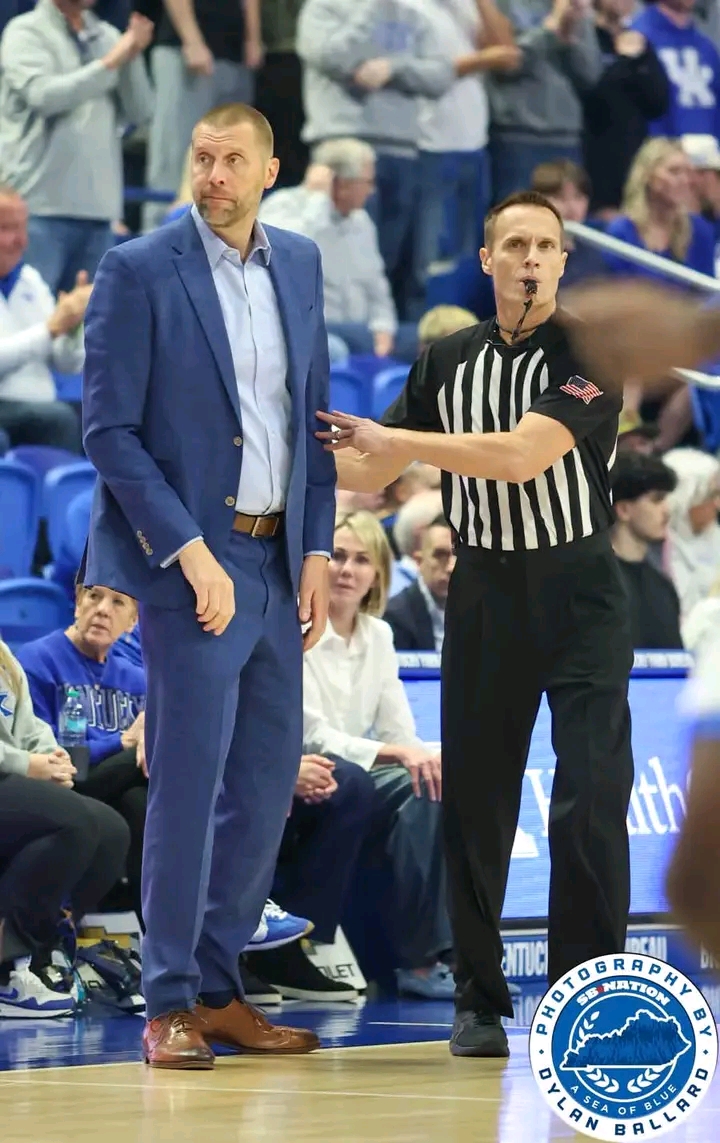
Kentucky basketball fans are used to seeing Mark Pope rotate players frequently, but the Wildcats’ exhibition victory over Texas Tech revealed a surprising change in approach. Instead of distributing minutes across a deep rotation, Pope relied heavily on a smaller group of players, raising questions about whether his coaching philosophy could be changing ahead of the regular season.
For a coach who traditionally values frequent substitutions and fresh legs, the decision stood out. And if this approach continues, it could have a significant impact on Kentucky’s season.
Mark Pope Is Trusting His Core Players
The playing-time numbers against Texas Tech told an interesting story. Malachi Moreno led Kentucky with 35 minutes, while Milan Momcilovic followed with 34. Alex Wilkins played 29 minutes, Ousmane Ndiaye recorded 28, and Mason Williams received 27 minutes.
Six Wildcats played at least 22 minutes, while Pope used only nine players overall. Three players coming off the bench received 12 minutes or fewer, leaving most of the workload to a smaller group.
That is a notable difference from Pope’s usual strategy.
Last season, Kentucky regularly used a deep rotation, with 10 players averaging more than 15 minutes per game. During the second exhibition against Georgetown last year, nine players received between 14 and 28 minutes, and nobody played more than 30.
Against Texas Tech, however, Pope appeared more interested in developing his primary rotation than distributing opportunities evenly.
Injuries Could Explain the Decision
There are important circumstances to consider. Kentucky was without Jerone Morton, Trent Noah, and Kam Williams, reducing Pope’s available options and limiting his bench depth.
Those absences may have contributed to the tighter rotation. Nevertheless, playing Moreno and Momcilovic for 35 and 34 minutes in an exhibition was unusual.
The extended minutes could help Kentucky’s leading contributors build chemistry, improve their communication, and become more comfortable playing together before the games begin to count.
Rather than giving everyone an equal opportunity to impress, Pope appeared focused on preparing his core players for bigger responsibilities.
Could This Change Kentucky’s Season?
The biggest question is whether Pope will maintain this approach when the regular season begins.
A shorter rotation could help Kentucky establish clear roles and allow its best players to develop consistency. However, relying heavily on a few contributors also creates concerns about fatigue and what happens if injuries affect the team again.
It is too early to conclude that Pope has abandoned his preference for a deep rotation. The exhibition setting and the Wildcats’ injury situation could explain much of the decision.
Still, the Texas Tech game gave Big Blue Nation an intriguing reason to pay attention.
Has Mark Pope found a core group he trusts to lead Kentucky this season, or was this simply a temporary adjustment? The Wildcats’ next games could provide a clearer indication of whether this surprising decision signals a lasting change.
