


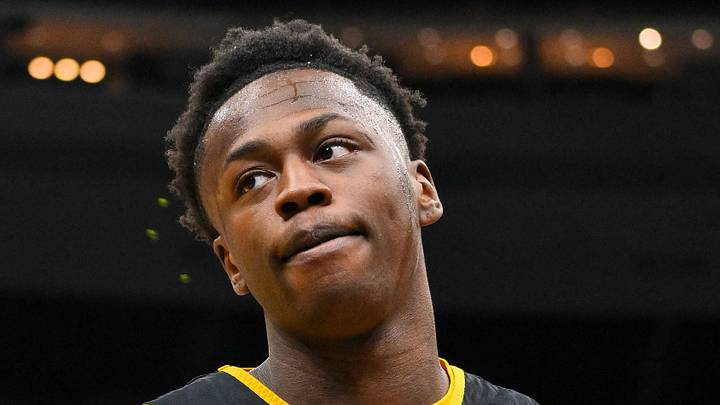
With the new college basketball season approaching, uncertainty surrounding fifth-year eligibility has become a growing concern for several programs. Missouri forward Mark Mitchell is among the players facing an uncertain future after a Kentucky appeals court overturned the temporary legal protection that had allowed him and other athletes to compete for another season.
According to a report from CBS Sports, the court’s decision on Friday, October 9, removed the injunction that had temporarily cleared Mitchell and several other athletes to play beyond their previously established eligibility limits.
The ruling does not officially end the legal battle. However, it creates another obstacle for players hoping to return to college basketball for an additional season, forcing them to consider alternative legal options as the season draws closer.
Mark Mitchell Is Among Several Players Affected
Mitchell is not the only college basketball player caught up in the ongoing eligibility dispute. Louisville’s Seth Trimble and LSU’s Skyy Clark are also among the players affected by the latest developments.
The case has attracted attention beyond basketball, with Kentucky linebacker Alex Afari and Texas Tech backup quarterback Thomas Castellanos also involved.
Although the latest ruling represents a significant setback, affected athletes could pursue individual lawsuits in their home states in an attempt to regain eligibility. That possibility offers some hope, but there is no guarantee that another legal challenge will succeed.
For Mitchell, the uncertainty is particularly significant because Missouri is counting on his experience and production as it prepares for the upcoming campaign.
Missouri Could Feel the Impact of Mitchell’s Absence
Mitchell’s eligibility situation could have a considerable effect on Missouri’s expectations this season.
According to the report, EvanMiya.com’s preseason projections place Missouri at No. 39 nationally with Mitchell available. Without him, the Tigers fall to No. 54.
That difference highlights the importance of the veteran forward to Missouri’s outlook. His potential return would give the Tigers an experienced player who could contribute on both ends of the floor and strengthen their chances of competing in the SEC.
If Mitchell ultimately cannot play, Missouri could face a more difficult path toward establishing itself as an NCAA Tournament contender.
However, his situation remains unresolved, meaning the Tigers must prepare for a season in which one of their most important players could have an uncertain status.
Another Appeals Court Delivers a Similar Decision
The Kentucky ruling came amid another legal setback for college athletes seeking additional eligibility.
Courthouse News reported that an Ohio appeals court overturned an earlier injunction involving 24 athletes, including former Xavier basketball player Filip Borovicanin.
The athletes had argued that losing another season of competition would cause irreparable harm, including the loss of opportunities to earn name, image and likeness compensation.
Although the court acknowledged the potential consequences for the athletes, it also considered the NCAA’s concerns about maintaining roster stability and protecting incoming freshmen.
The ruling supported the NCAA’s position that eligibility rules need consistent boundaries, including restrictions connected to the high school class of 2022.
The court also expressed concern about similar disputes being pursued through separate lawsuits in different jurisdictions.
The NCAA Continues to Gain Ground in Appeals
These latest developments follow a series of decisions that have complicated efforts by athletes to secure additional seasons.
In August, the Tenth Circuit temporarily halted a broader injunction in a case involving Northern Colorado’s Brock Wisne. The NCAA subsequently maintained that athletes who had relied on that injunction could no longer be considered eligible under the order.
An Ohio appeals court had also temporarily suspended an earlier eligibility injunction.
Together, these cases demonstrate how difficult it has become for athletes to rely on temporary court victories as a guarantee that they will be permitted to compete.
While some players have received favorable decisions at the trial-court level, appeals have repeatedly introduced new uncertainty.
Denzel Aberdeen’s Case Offers a Different Path
Florida guard Denzel Aberdeen recently secured a temporary legal victory in his own effort to obtain another season of eligibility.
However, his case differs from the broader disputes involving Mitchell and other athletes. Aberdeen’s lawsuit centers on a contract-related claim involving the NCAA and his school, rather than simply following the same legal arguments used in the other eligibility challenges.
His ruling is also temporary and could face further legal scrutiny.
As a result, Aberdeen’s success does not necessarily mean other players will receive similar outcomes.
What Happens Next for Mitchell?
For Mitchell and Missouri, the coming weeks could prove crucial. The forward’s future depends on how the legal process develops and whether he can secure another route to eligibility.
Until there is greater clarity, Missouri must contend with the possibility that its preseason plans could change significantly.
The broader situation also leaves college basketball fans with important questions about roster projections and team expectations. Programs relying on fifth-year players may need to reconsider their outlooks if those athletes are ultimately ruled ineligible.
For now, Mitchell’s return remains uncertain, and Missouri will have to wait for further developments before knowing whether one of its most important players can take the court this season.
