


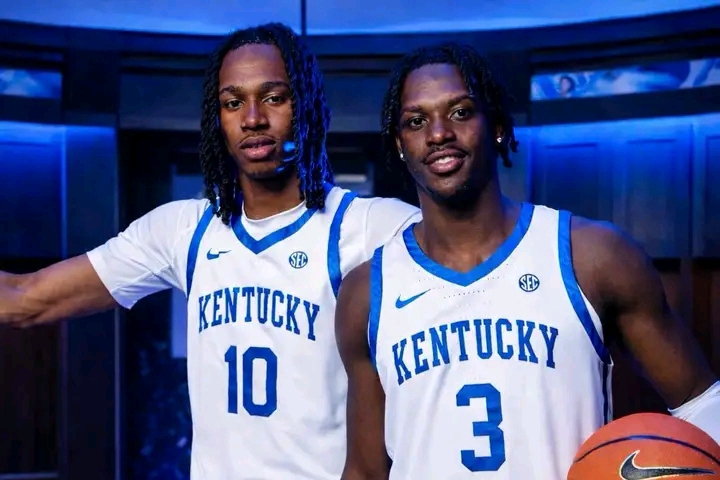
It’s becoming a familiar storyline around Kentucky basketball—no matter what move Mark Pope makes, skepticism seems to follow. And after landing Alex Wilkins to pair with Zoom Diallo in the backcourt, the conversation has quickly shifted from excitement to concern in national circles.
On paper, the idea makes sense. Kentucky adds two dynamic guards who can handle the ball, create offense, and take pressure off the rest of the roster. That’s something the Wildcats clearly lacked last season. But almost immediately after Wilkins’ commitment, analysts began pointing out a potential flaw that keeps coming up: shooting and spacing.
That concern took center stage when college basketball insider Jeff Goodman compared Kentucky’s new duo to Tennessee’s backcourt, favoring the Volunteers due to their ability to consistently knock down perimeter shots. His argument was simple—Diallo hasn’t proven himself as a reliable shooter yet, and Wilkins, while talented, has been inconsistent from three.
It’s not just noise either. Kentucky fans saw firsthand how a lack of shooting can stall an offense. When defenders don’t respect the perimeter, they collapse into the paint, clog driving lanes, and force difficult possessions. That exact issue plagued the Wildcats last season.
Still, there are reasons to believe this situation could play out differently. Diallo showed clear improvement as a shooter from his freshman to sophomore year, and Wilkins began to find a rhythm from deep late in the season. If both players continue trending upward, the spacing concerns may not be as damaging as critics expect.
Wilkins, in particular, is an interesting case. Coaches rave about his upside—a 6-foot-5 playmaker who can read defenses, operate in ball screens, and create opportunities for himself and others. But like many young guards, he comes with areas that need work, including strength, defensive consistency, and perimeter shooting.
That blend of potential and inconsistency feels familiar. Kentucky fans have seen similar player profiles before—high ceiling, but not fully polished. The key difference is that Wilkins has already proven he can deliver in big moments, including a standout NCAA Tournament performance against UConn.
Another layer fueling the debate is the divide between analytics and the eye test. Advanced metrics aren’t especially kind to Wilkins, ranking him lower than many expected and highlighting inefficiencies in his game. Yet scouts and coaches continue to believe in what they see on film—playmaking instincts, scoring ability, and long-term upside.
That puts Mark Pope in a position where he’s betting on development and fit over pure numbers. It’s a risk, especially considering last season’s struggles with shooting, but it’s also a calculated move based on system and potential growth.
For now, the doubts remain—and the same issue keeps surfacing. Can this backcourt shoot well enough to make everything else work? If the answer becomes yes, Kentucky could have one of the more exciting guard duos in the country. If not, the concerns being raised now may only grow louder once the season begins.
