


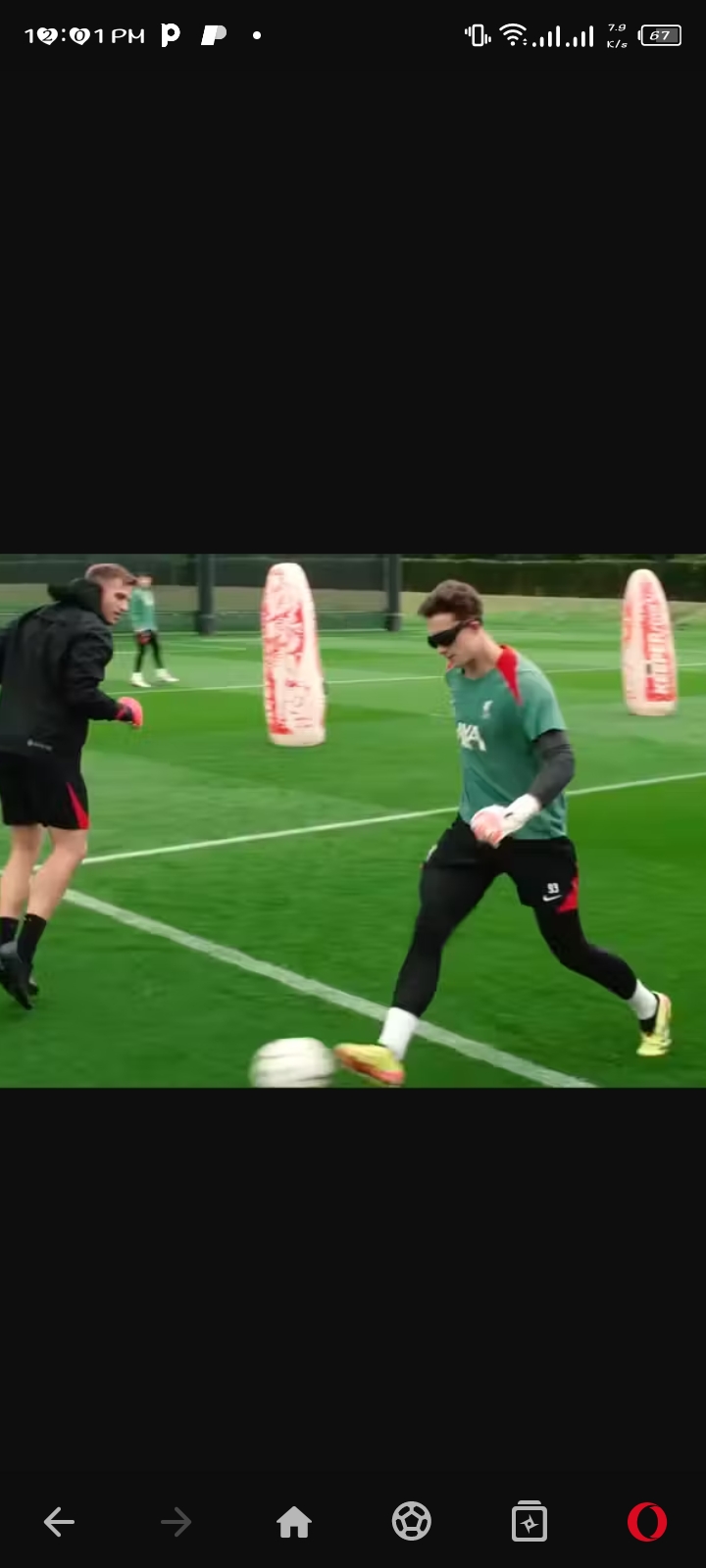
Slot continues Klopp’s meticulous methods by embracing innovative ideas and expert input, with goalkeepers wearing goggles and noise-cancelling headphones in training.
Marginal gains remain crucial for Liverpool’s success as they strive to secure major silverware under Slot.
The beauty of football managers lies within the idea that no two characters are ever the same. From training methods and in-game strategies, all the way through to interview techniques, this is the case in pretty much all aspects of leadership. And with Liverpool’s first pre-season without Jurgen Klopp in charge for nine years well underway, eagle-eyed fans have already spotted a key idiosyncrasy in the way Arne Slot goes about his business.
Although the sight of Liverpool’s goalkeepers wearing vision-impeding goggles during pre-season training may have left many feeling somewhat bemused this week, by reviewing the situation with more depth, it appears that Slot is emulating his predecessor’s meticulous methods that saw Klopp frequently engage with experts in various fields in order to build marginal gains.
The appointment of new goalkeeping coach Fabian Otte has already seen the Reds embrace innovative ideas around goalkeeper coaching, and as Liverpool continue to get to grips with life after Klopp, they confide in new ways of getting the club back on the yellow brick road towards domestic and continental success under their new Dutch boss.
Last week, the club’s YouTube channel posted a brief video of players returning to training ahead of the 2024-25 Premier League season. A standout moment featured Liverpool’s goalkeeper drills, where new goalkeeping coach Fabian Otte instructed 21-year-old Marcelo Pitaluga to use American-designed Swivel Vision training goggles. These goggles restrict peripheral vision, compelling users to enhance their visual tracking and rely more on audio cues.
As shown in the video, Otte was keen to encourage his players to “find angles” and “keep scanning” during their passing session, with noise-cancelling headphones also used as a method to further constrain sensory information — inhibiting audio cues and enhancing visual concentration.
Talking to The Athletic, Mostafa Dida, who is a goalkeeper coach at Egyptian Premier League side ZED FC said: “Throughout our training sessions, I’ve seen these goggles help goalkeepers improve their reaction times and develop superior mechanics, which are critical for their performance.
“From my own experience, repetitive use of the goggles strengthens the core muscle memory of the eyes and the mind. This helps players refine their reflexes and decision-making skills, ultimately leading to greater success on the pitch.”
Certainly, this isn’t the first time goggles have been used by goalkeepers. Before Switzerland’s quarter-final tie against England at EURO 2024, Yann Sommer and Gregor Kobel were seen wearing sunglasses in pre-match preparations. For onlookers, it might have just appeared as though the Swiss glove-bearers were on holiday. However, it has since been revealed that the ‘VisionUp’ sunglasses cause a slow motion effect, forcing goalkeepers to perfect their anticipation, similarly to that of the goggles Liverpool have been using
