


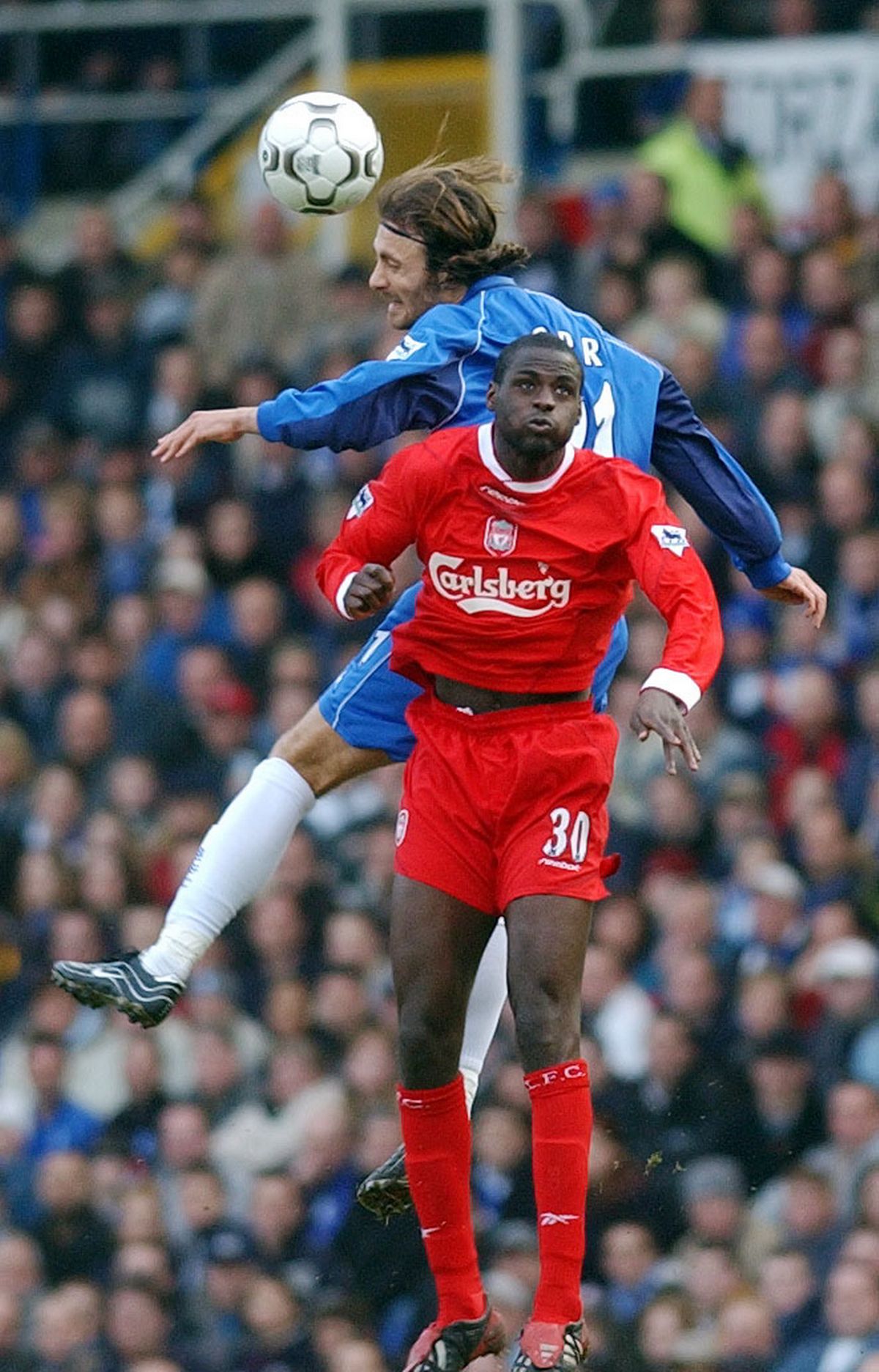
There are countless reasons why Liverpool’s incredible fifth European Cup win will be remembered and celebrated by fans for as long as the club exists.
The amazing comeback from three goals down at half-time against a star-studded AC Milan team, the Reds reclaiming their title as Kings of Europe after a long 21-year wait, and Rafa Benitez’s team silencing the taunts of Everton fans who were thrilled that their team finished above Liverpool and qualified for the Champions League play-offs, just to name a few.
That sense of redemption also applies to several of the Liverpool players who became legends on that unforgettable night in the Turkish capital. No one could ever honestly say that the Reds’ 2005 team was among the club’s best in terms of skill – or arguably, even in the top 10 – but the fact that such a relatively modest team managed to defy the odds and beat a clearly superior team of proven winners only adds extra shine in the eyes of many.
And the fact that several members of the squad who led the Reds to victory had long been dismissed as failures, including one much-criticised defender who had become a laughing stock after a high-profile own goal only months earlier, but was lifted up by an inspiring pep talk from a team-mate who knew all too well what it feels like when your name becomes a joke.
Djimi Traore, who celebrated his 44th birthday earlier this month, was just 18 when he joined Liverpool in February 1999. He was one of the first players signed by Gerard Houllier, who had become the sole manager of the Reds only three months earlier, reports the Liverpool Echo.
Houllier quickly returned to France to start his revolution at Anfield, spending £1.5m to bring former Nantes midfielder Jean-Michel Ferri from Istanbulspor in Turkey. Not long after, he spent another £2.6m on Rigobert Song, a centre-back from Cameroon who had made a name for himself in France with Metz before moving to Salernitana in Italy.
Houllier prioritised strengthening the defence, spending £700,000 on Frode Kippe, a towering Norwegian defender from Lillestrm, and using his experience as the technical director of the French Football Federation to sign one of France’s most promising young defenders. Despite only making a few appearances for his local club, Stade Lavallois, young Traore had already caught the attention of big clubs like Paris St Germain, AC Milan, Parma and Lazio. Liverpool’s manager Houllier quickly secured a £550,000 deal to bring him to Merseyside, telling the press: “You’ll thank me for signing him.”
It wasn’t until the next season that Traore made his first-team debut, starting both legs of the Reds’ League Cup second-round tie with Hull City. These were his only games until almost a year later, when he started the first five Premier League matches at left-back in the 2000-01 season.
Houllier’s reign truly kicked off with his team bagging an unheard-of cup Treble. However, Traore’s greenness was clear from the early games.
He accidentally set up Southampton’s Marian Pahars for a last-minute equaliser, earning the Saints a point after they had been three goals behind on Liverpool’s final visit to the Dell. Soon after, he clumsily gave away a penalty to Alf-Inge Haaland (father of Erling) which let Manchester City draw level from two goals down at Anfield.
A late goal from Dietmar Hamann saved the day. The young Frenchman played 12 times that season but none after late November. The next summer, he went back to France on a year-long loan with Lens. There, alongside Senegal forward El-Hadji Diouf – who would join the Reds at the end of that campaign – he gained valuable experience and nearly won the French championship, a key part of his learning journey.
“Before I joined Liverpool I had only played five games as a professional and that was in the second division in France,” Traore said. “I wasn’t well-known and didn’t have much experience as a professional, Liverpool was my learning process and it was a high level, so it was not easy. I had to play a year-and-a-half in the reserves, where we won the championship and I was named captain, wherever I’ve been people have said I’m one of the future but that never stopped me wanting to play earlier than that. At first I was a bit apprehensive about coming to Liverpool but fortunately I knew there were some players like Rigobert Song and Jean-Michel Ferri who could take me under their wing and the fact the manager and his coaches are French influenced my choice. There were no regrets.
“I started off as an attacking midfielder at Laval and did quite well because I scored pretty regularly and got forward very often. But after a while I was pulled back into a defensive role because I kept hold of the ball too much. Well, that’s what people told me. You see, my game was based too much on the football I used to play when I was with my friends in Paris, where we wouldn’t run back after we lost the ball. I prefer to play in the middle of the defence as that’s where I learnt my trade but I’ve noticed that in France and in England too that people tend to have more confidence in a youngster who plays left-back rather than central defence.”
When Traore came back to Anfield, he was put straight into Liverpool’s main team. He played in 45 out of 60 matches that season because Stephane Henchoz got hurt early on.
This let Traore play as a centre-back, which he likes best. But this was the season when things started to go wrong for manager Gerard Houllier after a good start. Houllier had come back from serious heart problems the season before. His team was close to winning the Premier League and Champions League.
He said they were “10 games from greatness”. They didn’t win, but they did really well with 80 points and coming second in the league. People thought that if Liverpool got some good new players in the summer, they could win big the next season.
The choice not to keep former Arsenal striker Nicolas Anelka and instead sign Traore’s old Lens mate Diouf – along with two more signings from the French league, Salif Diao and Bruno Cheyrou – showed that Houllier’s magic touch was fading since his illness. Despite a strong start to the season, an 11-game winless streak began with a loss at Middlesbrough, from which the campaign never recovered.
Liverpool were knocked out of the Champions League in the group stages after drawing a must-win game at FC Basel. Even though they won the League Cup the following March, a defeat at Chelsea on the last day meant they didn’t qualify for the next season’s Champions League. This was a disappointing end to a season that started with real hopes of winning the title.
Traore netted his first goal for Liverpool in the following season – a fantastic shot during a UEFA Cup match against Steaua Bucharest. Despite the slippery conditions, he managed to control a short corner from Steven Gerrard and scored with his weaker right foot.
However, that was one of only 14 games he played that season as he seemed to fall out of favour. It was another disappointing season for Liverpool, who were knocked out of domestic cups by lower division teams Bolton Wanderers and Crystal Palace, and lost to Marseille in the quarter-finals of the European competition.
Rafael Benitez got the best out of Djimi Traore at Anfield (Image: Getty Images)
The Reds did manage to finish fourth and qualify for the next season’s Champions League, thanks to Newcastle United losing their advantage in the final weeks. But when Houllier’s five-and-a-half year reign ended, no one was surprised. Traore admitted he had lost faith in his former mentor and would have left if he had stayed in charge.
He expressed: “He was much appreciated by the Englishmen and I can see why. But a lot of the French players didn’t have a chance to play and express themselves. We had to work twice as hard to play. I mainly played left-back but left-back was not my position; centre-back was. And when I played centre-back it was on the right because I was mainly next to Sami Hyypia and Sami didn’t like playing on the right. For a left-footed player that is also not easy. In the end, I didn’t trust him anymore. I was upset. So many times I knocked on his door saying I wanted to leave the club. It was frustrating because I didn’t play. And nothing changed. If he would have stayed then I would not be at Liverpool anymore.”
Rafa Benitez, a Spanish coach who had briefly shaken up the dominance of Real Madrid and Barcelona in La Liga by leading Valencia to two league titles, replaced Houllier. He also won the UEFA Cup in the previous season.
Despite almost signing for Everton during the summer, Traore was back in the team under Benitez, who quickly made Jamie Carragher Hyypia’s centre-back partner. Traore played in 42 out of the 60 matches Liverpool played that season, which was full of surprising contrasts.
