


Kentucky basketball is still searching for consistency under Mark Pope, but several former Wildcats are already making significant impacts at their new schools. Their early-season performances are raising an uncomfortable question for Big Blue Nation: Did Kentucky move on from too many players who could have helped this team?
After last season’s disappointing NCAA Tournament exit against Iowa State, Pope and his coaching staff decided to make major changes to the roster. The result was another significant rebuild, with Kentucky retaining just five players: Malachi Moreno, Kam Williams, Braydon Hawthorne, Reece Potter, and Trent Noah.
The coaching staff brought in nine new players through high school recruiting, international recruiting, and the transfer portal. However, not every former Wildcat has struggled to find success elsewhere.
Several players who left Lexington have enjoyed impressive starts to the 2026-27 season, and their performances are becoming increasingly difficult for Kentucky fans to ignore.
Collin Chandler Is Making a Major Statement
One of the biggest examples is Collin Chandler, who transferred back home to BYU.
The junior guard is averaging 19.1 points, 3.9 rebounds, and 2.1 assists per game while shooting an impressive 52.6% from the field. Those numbers represent a significant jump from his sophomore season at Kentucky, when he averaged 9.7 points, 2.8 rebounds, and 2.3 assists.
Chandler’s development is exactly the kind of improvement Kentucky hoped to see from its returning players.
Jaland Lowe is another former Wildcat making an impact. Now healthy at Georgetown, Lowe is averaging 16.3 points, 3.2 rebounds, and 7.3 assists per game. Considering the injuries that limited his availability at Kentucky, his production raises questions about what might have happened if he had enjoyed a healthier season in Lexington.
Jelavic, Johnson, and Other Transfers Are Producing
Andrija Jelavic has also taken a noticeable step forward at Ohio State. After averaging 5.5 points per game at Kentucky, he is now scoring 10.0 points while adding 6.3 rebounds and 1.8 assists per contest. He is shooting 50.9% from the field.
Jasper Johnson has doubled his scoring average after transferring to Oregon. He has increased his production from 4.9 points per game at Kentucky to 10.0 points while shooting an impressive 59% from the field.
Mo Dioubate is averaging 11.7 points and 6.5 rebounds at LSU, shooting 59.6% from the field. Brandon Garrison has also increased his scoring average, going from 4.7 points at Kentucky to 8.2 points at his new school.
Denzel Aberdeen, meanwhile, has returned to Florida for his fifth year of eligibility. He is averaging 11.8 points, 1.9 rebounds, and 2.1 assists while shooting 45.7% from the field. Although his numbers have dipped slightly, his role is different because he is no longer required to carry the primary point guard responsibilities.
Kentucky’s Biggest Problem Could Be Roster Retention
The numbers do not automatically mean every former Kentucky player would be producing at the same level in Lexington. Different teams, coaching systems, playing time, and responsibilities all contribute to individual statistics.
Still, the collective production of these former Wildcats creates a difficult conversation for Pope and his staff.
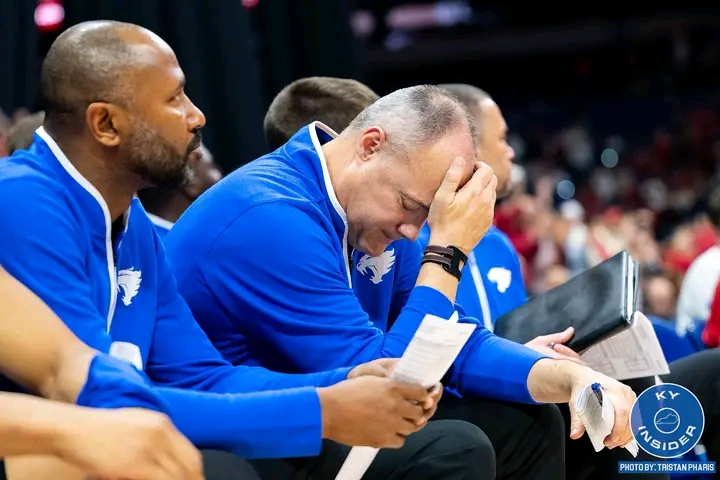
Kentucky is currently 4-2 after suffering a 20-point loss to Kansas and a 14-point defeat against Indiana. The Wildcats have struggled to establish a consistent identity, particularly against stronger competition.
One of Pope’s original goals when he arrived in Lexington was to build continuity through player retention and development. However, another major roster overhaul has left Kentucky searching for answers while several former players appear to be flourishing elsewhere.
There is still plenty of basketball left to play, and the current roster has time to improve. But the early performances of Chandler, Lowe, Jelavic, and the other transfers have made one thing clear: Kentucky’s roster decisions deserve serious scrutiny.
For Big Blue Nation, the question is becoming harder to avoid. Did Mark Pope make the right decisions when reshaping his roster, or could keeping more of last year’s talent have given Kentucky a better foundation for this season?
