


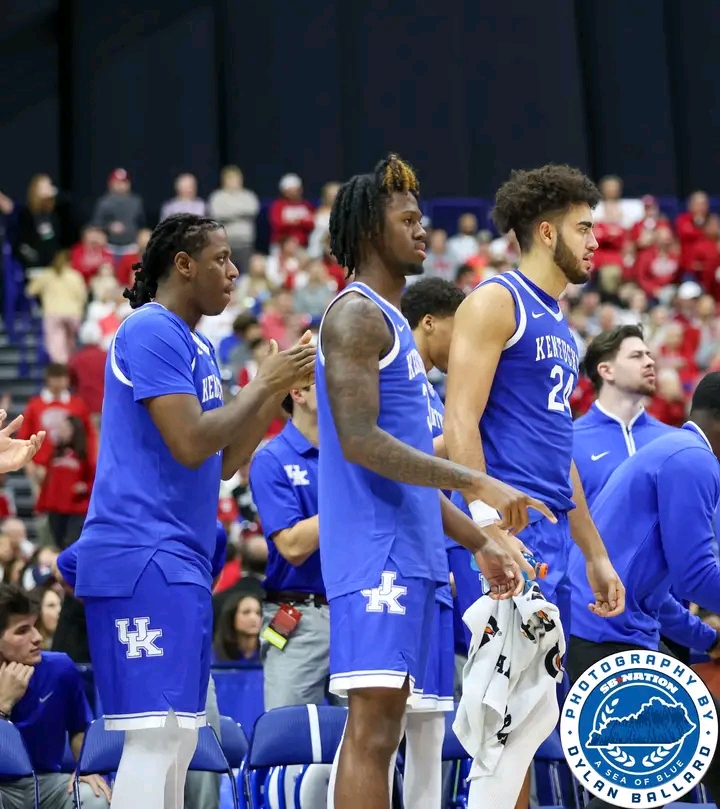
Building a championship-caliber basketball team at Kentucky has never been an easy task, but the modern transfer portal era has introduced a new challenge that makes the job even more complicated. Head coach Mark Pope understands that reality, and his latest comments offer an interesting look at what he is facing in Lexington.
Since taking over the Wildcats in 2024, Pope has relied heavily on the transfer portal to construct his rosters. He brought in nine players during his first offseason and followed that up by adding six transfers in each of the 2025 and 2026 cycles.
While the portal has given coaches more opportunities to acquire experienced talent, it has also made building long-term continuity increasingly difficult.
During a conversation with college basketball insider Jon Rothstein, Pope addressed how player movement has fundamentally changed roster construction. According to the Kentucky coach, programs are increasingly being forced to assemble teams with the understanding that their time together could be limited to a single season.
“We’re in this era where seasons are standalones,” Pope explained.
Pope admitted that there was something special about the previous system, when coaches could recruit players, develop them over several seasons, and build a strong foundation around a familiar group.
That approach allowed programs to establish chemistry and develop players into important contributors over time.
However, the current transfer portal environment has made that process much harder.
Pope acknowledged that coaches are now sometimes reconstructing their rosters with the expectation of making the most of a single season together.
“But you really, in some essence now, are reconstructing a team for a one-year run in some senses,” he said.
Interestingly, Pope does not believe everything about this new reality is negative. He also sees opportunities in the urgency it creates, explaining that teams must appreciate every moment together and maximize their limited time to develop.
Kentucky still has players who have remained in the program for multiple seasons, including third-year players and Trent Noah, who has been with Pope since his first recruiting class.
Nevertheless, maintaining that kind of continuity is becoming increasingly difficult across college basketball.
For Pope, the challenge is particularly important because expectations at Kentucky are enormous.
Last season’s Wildcats reportedly operated with a roster budget exceeding $22 million, yet they finished 22-14 before losing to Iowa State in the second round of the NCAA Tournament. That result followed a Sweet Sixteen appearance during Pope’s first season.
Now in Year 3, Pope faces increasing pressure to turn Kentucky’s talent and investment into consistent championship-level performances.
The early portion of the 2026-27 season has not made that task any easier. Kentucky enters Thanksgiving with a 4-2 record after a 20-point loss to Kansas, a disappointing 90-76 defeat against Indiana, and a narrow 78-77 escape against Northern Arizona.
Those performances have raised questions about the team’s chemistry, defensive consistency, and ability to compete against quality opponents.
Ultimately, Pope’s comments reveal an important part of the challenge facing Kentucky basketball. Recruiting talented players is no longer enough. Coaches must quickly bring different personalities and playing styles together, establish chemistry, and create a winning identity before the roster potentially changes again.
For Pope, the mission is clear: Kentucky cannot afford to waste its opportunities.
The Wildcats have the resources, expectations, and basketball tradition to compete for championships. But turning those advantages into a national title will require Pope to master the increasingly complicated business of building a team in the transfer portal era.
