


Kentucky’s disappointing 90–76 loss to Indiana has exposed a growing concern for Mark Pope, and opposing coaches may have just received a blueprint for how to make life difficult for the Wildcats moving forward.
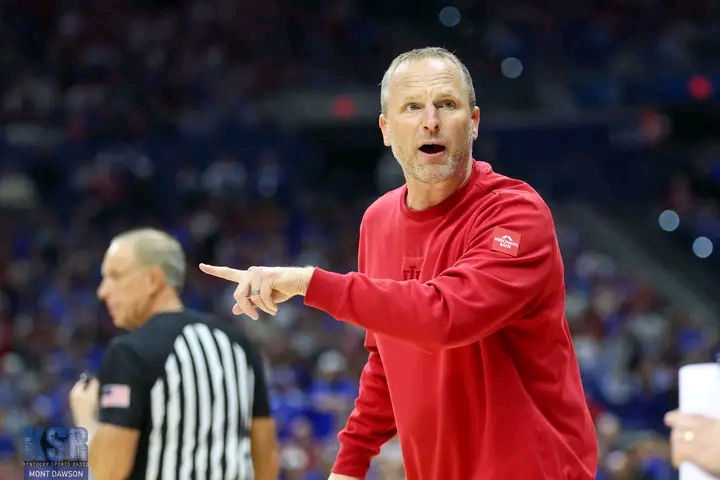
Indiana head coach Darian DeVries watched his team take advantage of several weaknesses in Kentucky’s game, particularly its defensive discipline, rebounding struggles, and inability to maintain offensive consistency for an entire game.
What makes the defeat particularly concerning is that Kentucky actually looked like the better team for much of the first half. The Wildcats entered halftime with a 47–45 advantage, thanks largely to Milan Momcilovic, who exploded for 22 first-half points on his way to a 28-point performance.
However, everything changed after the break.
Indiana outscored Kentucky 45–29 in the second half, turning a competitive contest into a comfortable 90–76 victory. The difference wasn’t simply Indiana making more shots. The Hoosiers consistently attacked areas where Kentucky struggled to respond.
One of the biggest problems was Kentucky’s defensive discipline. The Wildcats committed 12 shooting fouls, including several costly fouls on three-point attempts. Indiana took full advantage, converting 28 of its 31 free throws compared to Kentucky’s three makes on seven attempts.
Those numbers reveal how easily opposing teams could punish Kentucky if the Wildcats continue making unnecessary defensive mistakes.
Rebounding was another weakness Indiana successfully exploited. Kentucky struggled to establish position, box out opposing players, and secure defensive rebounds. Indiana finished with 14 offensive rebounds and converted those extra opportunities into 18 second-chance points.
That is precisely the kind of weakness opposing coaches will study when preparing to face Pope’s team.
Kentucky’s offensive dependence on perimeter scoring also became increasingly obvious. Momcilovic carried much of the scoring responsibility in the first half, but when his production slowed after halftime, the Wildcats struggled to find another consistent source of offense.
Indiana also benefited from Kentucky’s eight turnovers, converting them into 16 points while winning several important loose-ball situations.
For DeVries, the victory demonstrated how effective a disciplined approach can be against Kentucky. For Pope, however, it should serve as a serious warning.
The biggest concern isn’t necessarily losing to Indiana. It is how clearly the Hoosiers exposed problems that other opponents could potentially exploit.
If Kentucky continues fouling jump shooters, surrendering offensive rebounds, committing careless turnovers, and depending too heavily on individual scoring performances, opposing teams will have every reason to attack those weaknesses.
Pope now faces an important challenge. He must improve his team’s defensive discipline, demand greater effort on the boards, and develop more reliable offensive options when the perimeter shooting disappears.
Kentucky has the talent to compete with quality opponents, but talent means very little when fundamental mistakes repeatedly put the team in difficult situations.
DeVries and Indiana may have secured one impressive victory, but they also provided the rest of Kentucky’s opponents with something valuable: a closer look at how to challenge Mark Pope’s Wildcats.
And unless Pope fixes these problems quickly, Indiana might not be the last team to take advantage of them.
