


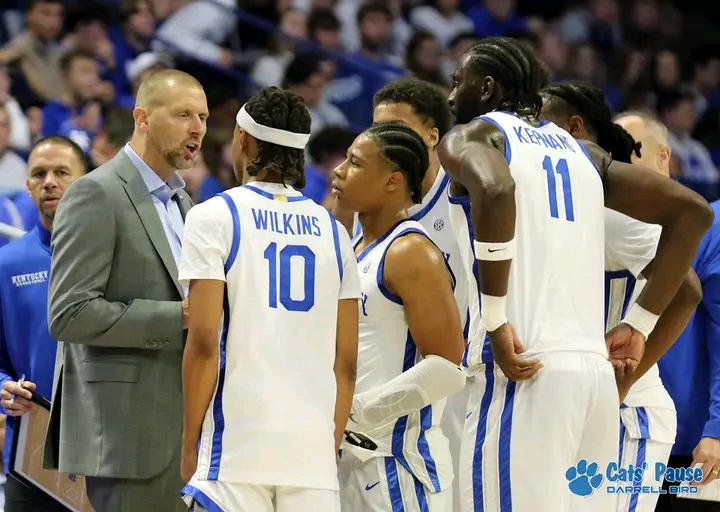
Kentucky basketball has the resources, reputation, and fan support to compete for some of the best players in college basketball. However, head coach Mark Pope has made one thing clear: he isn’t interested in winning every recruiting battle simply by offering players more money.
As the Wildcats prepare for the 2026-27 season, questions about their NIL spending continue to attract attention. Reports from last season suggested that Kentucky spent approximately $22 million assembling its roster, leading to speculation about whether the program remains among the biggest spenders in college basketball.
But Pope’s latest comments suggest that the Wildcats’ recruiting strategy involves much more than financial power.
During an appearance on The Hoops HQ Show with Seth Davis and Andy Katz, Pope discussed Kentucky’s position in the increasingly competitive NIL market. While he acknowledged that the program would remain financially competitive, he also pushed back against reports suggesting that the Wildcats were spending more than they actually were.
Pope explained that determining how much each program spends is difficult because player contracts and NIL agreements are not publicly available in a consistent manner. He also noted that reports about Kentucky’s financial commitments have sometimes been significantly inflated.
Although Pope expects Kentucky to remain competitive financially, he described the Wildcats as potentially having a relatively modest roster budget compared with other top-tier programs.
His comments offer an interesting perspective on how one of college basketball’s most prominent programs approaches roster construction.
Mark Pope Isn’t Interested in Winning Every Recruiting Battle With Money
Pope made it clear that Kentucky will continue to provide competitive NIL opportunities for players who want to join the program. However, he does not want the Wildcats to become a destination for athletes whose primary motivation is financial compensation.
According to the Kentucky coach, the program rarely wants to be the school offering the most money to a recruit.
Instead, Pope wants players who understand what it means to represent Kentucky and are motivated by more than the financial benefits.
That distinction matters in Lexington, where playing for the Wildcats comes with enormous expectations. The attention surrounding the program can be intense, and players must be prepared to handle pressure from fans and the media while competing against the best teams in the country.
Pope believes that players who choose Kentucky exclusively for financial reasons could struggle in that environment.
For him, recruiting the right personalities and finding players who genuinely want to be part of the program are essential components of building a successful team.
Kentucky’s Transfer Portal Success Supports Pope’s Approach
Pope also highlighted Kentucky’s recent achievements in the transfer portal as evidence that the program’s recruiting philosophy is working.
He explained that Kentucky is one of only two programs to secure top-five transfer portal classes in each of the past three years.
That consistency is significant in an era when roster construction has become increasingly competitive and experienced transfers can dramatically change a team’s outlook.
Kentucky has continued to attract high-level talent, including Milan Momcilovic, one of the notable players available in the latest transfer cycle.
Rather than focusing exclusively on the biggest financial offers, Pope wants to identify players who fit his system, understand the expectations of Kentucky basketball, and are committed to helping the team succeed.
The goal is to assemble a roster that combines talent, chemistry, and a shared desire to compete at the highest level.
What This Means for Kentucky’s 2026-27 Season
Pope’s comments provide an important glimpse into how he intends to build Kentucky’s program moving forward.
The Wildcats will continue competing financially with other major programs, but the coach appears determined not to let NIL spending become the defining feature of his recruiting strategy.
That approach will be tested as Kentucky attempts to turn its roster-building success into results on the court.
With expectations remaining high in Lexington, Pope understands that attracting talented players is only the beginning. Those players must work together, embrace their roles, and perform when the pressure is at its highest.
Ultimately, Pope’s message is straightforward: Kentucky will spend what it needs to remain competitive, but it will not automatically offer the most money just to win a recruiting battle.
For Wildcats fans, that philosophy could be encouraging. In an era when college basketball recruiting is increasingly influenced by financial opportunities, Pope is emphasizing commitment, fit, and the desire to represent Kentucky.
Whether that approach leads to the results fans expect remains to be seen. But one thing is clear: Pope wants players who choose Kentucky because they believe in the program, not simply because of what it can pay them.
