


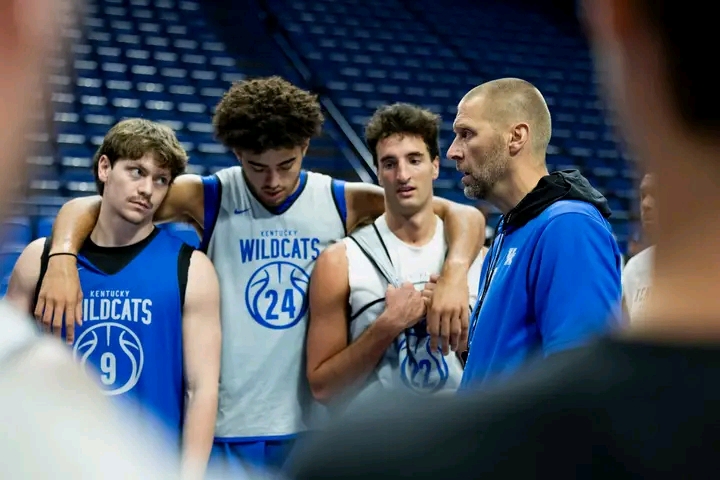
Mark Pope has made significant changes to Kentucky’s roster ahead of the 2026–27 college basketball season, hoping to address the problems that contributed to the Wildcats’ disappointing campaign last year. After watching injuries and a lack of reliable playmaking options disrupt the team, Pope appears determined to build a deeper, more versatile roster capable of handling adversity.
One of Kentucky’s biggest weaknesses last season was its shortage of dependable point guards. Injuries to Jaland Lowe and Jaylen Lo made an already difficult situation worse, leaving the Wildcats without enough consistent ball handlers to keep their offense running smoothly.
Without reliable playmakers, Kentucky struggled to establish the offensive rhythm Pope wanted. Players were often forced into unfamiliar responsibilities, making it harder for the team to maintain consistency when facing tougher competition.
This offseason, however, Pope has taken steps to prevent the same problems from happening again.
Mark Pope Rebuilds Kentucky’s Backcourt
Kentucky’s offseason roster construction reflects a clear emphasis on depth, versatility, and playmaking. Rather than depending on a limited number of players to handle the ball, Pope has prioritized adding guards and other players capable of creating opportunities for themselves and their teammates.
That approach could become particularly important during the demanding SEC schedule, when injuries, foul trouble, and defensive pressure can quickly expose weaknesses in a team’s rotation.
Pope has also emphasized the importance of versatility. By bringing in players who can contribute at multiple positions, Kentucky has the potential to maintain its offensive structure even when substitutions become necessary.
The goal is to create a team that moves the ball effectively, spaces the floor, and gives its best offensive players more opportunities to operate in favorable situations.
The addition of Iowa State transfer Milan Momcilovic further strengthens Kentucky’s offensive outlook. His perimeter shooting could help create additional space for the Wildcats’ guards and interior players.
Meanwhile, recruiting efforts involving prospects such as 2027 wing Ryan Hampton reflect Pope’s continued interest in securing talented players who can contribute to Kentucky’s future.
Physicality Remains Kentucky’s Biggest Concern
Although the Wildcats have made encouraging changes, questions remain about whether the roster can withstand the physical demands of SEC basketball.
Kentucky struggled against stronger opponents last season, and having players with impressive height or individual talent did not always translate into success in physical matchups.
The challenge extends beyond simply adding bigger players. Kentucky must become more consistent at finishing possessions, battling for rebounds, defending the paint, and maintaining its composure when opponents increase the physical pressure.
Pope has acknowledged the importance of improving the team’s strength and toughness, making physical development an important priority heading into the new season.
The Wildcats will need their returning players to make progress in these areas while their newcomers adjust to the expectations of playing at Kentucky.
Can the Wildcats Turn Their Changes Into Results?
Pope’s offseason moves suggest that he understands what went wrong last season. Kentucky has worked to improve its guard depth, expand its offensive options, and create a roster capable of adapting when circumstances change.
Those improvements could make a meaningful difference during the 2026–27 campaign, particularly if the Wildcats avoid the injury problems that disrupted their previous season.
However, roster construction is only part of the equation. Kentucky must demonstrate that its new pieces can work together and that its players can compete physically against the SEC’s toughest teams.
If Pope can turn the Wildcats’ improved depth and versatility into consistent performances while addressing their concerns about strength, Kentucky could look considerably different from the team that struggled last season.
For now, the biggest question is whether these offseason changes will translate into better results when the games begin to matter most.
