


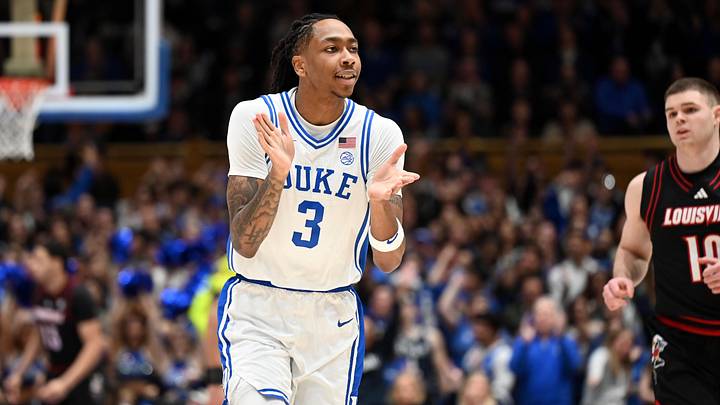
For a few tense hours, it looked like former Duke standout Isaiah Evans might become one of the biggest surprises of the 2026 NBA Draft.
After entering the draft with expectations of hearing his name called in the first round, Evans watched as team after team passed on him. As the only green room invitee left waiting, the disappointment was impossible to ignore.
But while much of the basketball world focused on his draft slide, the Minnesota Timberwolves appeared to be executing a plan that had been in motion for weeks.
When Minnesota selected Evans with the No. 33 overall pick, they didn’t just add another young prospect. They landed a player they had quietly targeted throughout the pre-draft process.
The Timberwolves had been heavily connected to Evans leading up to draft night. Their decision to trade down from No. 28 to No. 33 raised eyebrows at the time, but the move now looks much more strategic. Minnesota believed Evans would still be available, allowing them to gain additional value while still securing the player they wanted.
That confidence revealed something important: the Timberwolves saw Evans differently than many other teams.
Minnesota’s front office believes Evans possesses the exact skill set needed alongside franchise star Anthony Edwards. His ability to stretch the floor, knock down perimeter shots, and create spacing makes him an ideal fit in the Timberwolves’ offensive system.
The opportunity becomes even more intriguing when considering the team’s current roster situation.
With limited salary-cap flexibility and uncertainty surrounding perimeter depth following Donte DiVincenzo’s Achilles injury, Minnesota needs affordable contributors who can make an impact quickly. Evans arrives with a legitimate chance to compete for meaningful minutes much sooner than most second-round selections.
His shooting remains his biggest calling card. Even during a season that featured occasional cold stretches, Evans continued to show why he is regarded as one of the most dangerous perimeter threats from his draft class. Defenses will have a difficult choice when Edwards attacks the paint and Evans waits beyond the arc.
But Minnesota’s interest goes beyond shooting.
The organization also sees long-term potential in Evans as a two-way wing. His defensive growth at Duke, combined with his length and athleticism, suggests he could eventually develop into the type of versatile 3-and-D player every NBA contender covets.
The biggest question will be physical development. Adding strength and adapting to the NBA’s physicality will determine how quickly Evans can establish himself at the next level.
Still, it’s easy to understand why Minnesota was willing to wait.
While many teams focused on immediate needs or safer selections, the Timberwolves identified a player whose value may have exceeded his draft position. Now Evans enters a situation where opportunity, fit, and motivation all align.
What looked like a disappointing draft night may ultimately become the start of one of the biggest steals of the 2026 NBA Draft.
