


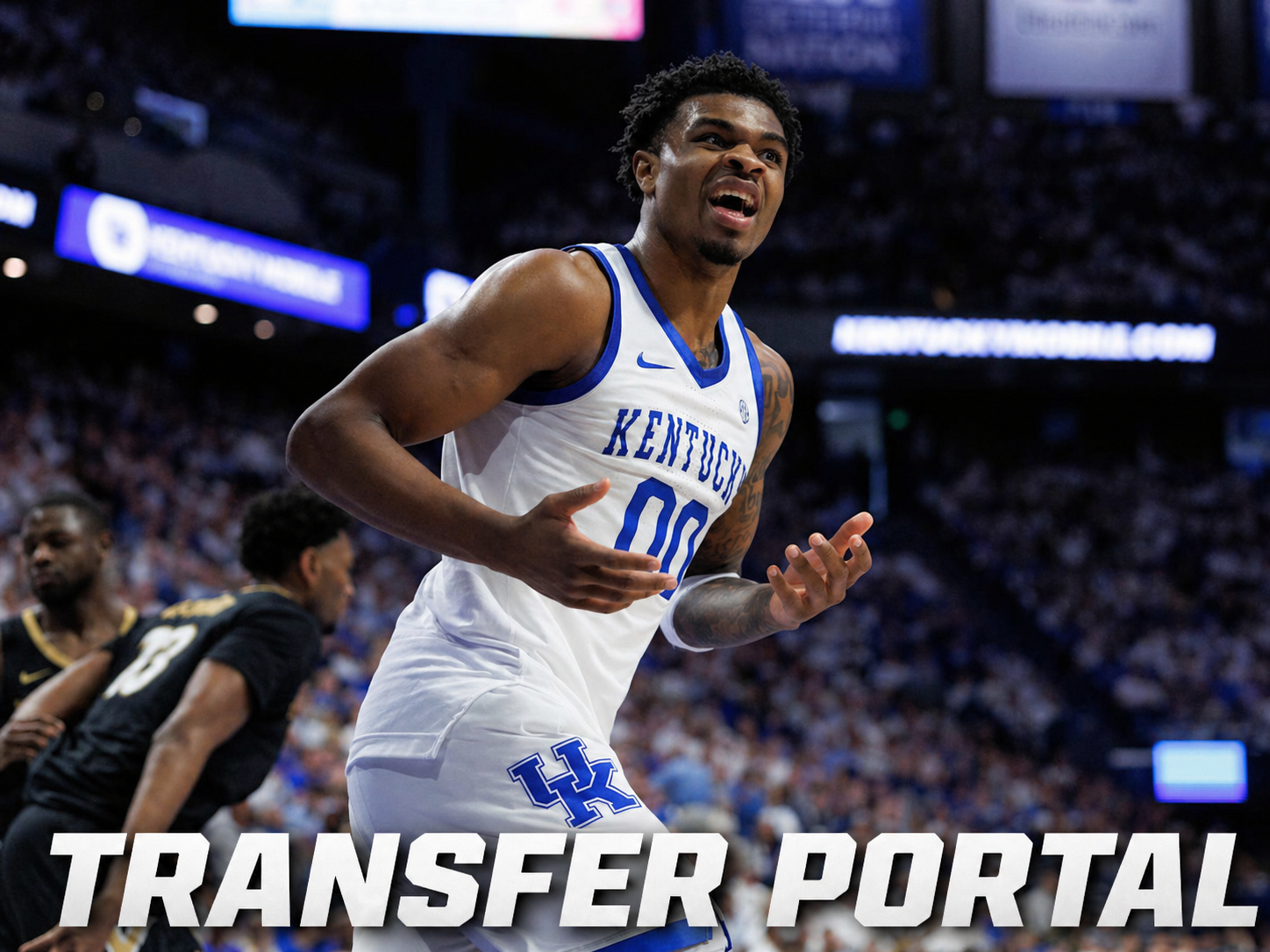
It may not have popped up on many calendars, but April 27 quietly marked a meaningful moment in recent Kentucky basketball history. Two years ago, Mark Pope—fresh into his role as head coach—landed a transfer commitment from Oklahoma guard Otega Oweh, a player ranked just No. 193 in the portal
That modest ranking didn’t hint at what was coming.
In just two seasons at Kentucky, Oweh developed into the most impactful player of the Mark Pope era so far. He scored 1,255 total points—more than any player in program history whose UK career lasted only two years. Along the way, he delivered unforgettable moments: buzzer-beaters, clutch performances in rivalry games, and late-game heroics that defined Kentucky’s biggest wins.
His résumé speaks for itself. Oweh hit a game-winning shot in the SEC Tournament against Oklahoma in 2025 and forced overtime in an NCAA Tournament matchup versus Santa Clara in 2026. He also came through in key victories over Duke, Louisville, and Tennessee—games that matter deeply to the Big Blue Nation.
But beyond the highlights, Oweh’s story offers something more important: a blueprint for success in the transfer portal.
When Pope assembled his first Kentucky roster, Oweh wasn’t even among the most celebrated additions. In fact, he ranked seventh among the nine transfers UK brought in that year. Several teammates arrived with higher rankings and bigger expectations.
Yet Oweh outperformed them all.
That’s where the first lesson comes in—evaluation matters more than rankings. At Oklahoma, Oweh showed flashes but struggled with consistency, even losing his starting role during conference play. Still, Pope had seen enough to recognize untapped potential, particularly on the defensive end.
That belief paid off.
The second lesson is just as critical: fit can unlock everything. In Pope’s five-out offensive system, Oweh found the spacing and freedom he needed to thrive. His scoring jumped significantly after arriving in Lexington, rising from 11.8 points per game at Oklahoma to 16.2 in his first season at UK, then climbing again to 18.6 in his final year.
Even when his shooting efficiency dipped, his role and confidence allowed him to remain productive and consistent—scoring in double figures in 68 of his 72 games as a Wildcat.
Kentucky’s experience mirrors a broader trend in college basketball. Michigan’s 2026 national championship run, powered entirely by transfer starters, showed that success isn’t about stacking the highest-ranked players—it’s about assembling the right pieces. Players like Elliot Cadeau, who thrived after finding a better fit, highlight how the portal can transform careers when used wisely.
Oweh’s journey reinforces that idea.
He wasn’t the most hyped addition. He wasn’t the highest-ranked. But in the right system, with the right evaluation, he became a star—and a cornerstone of Kentucky basketball.
Two years after his commitment, Otega Oweh stands as proof that in the transfer portal era, identifying talent and maximizing fit will always outweigh chasing rankings alone.
