


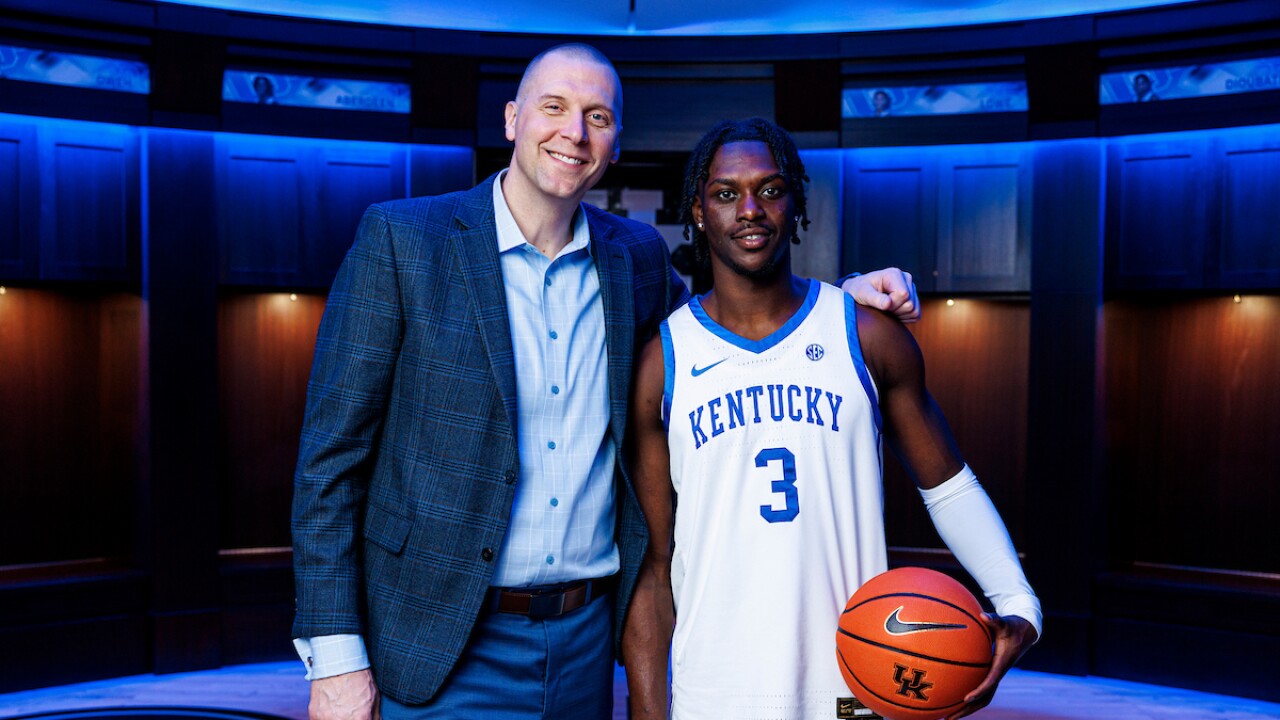
Mark Pope may have landed a major transfer portal addition in Zoom Diallo, but the move comes with a familiar concern. For Kentucky fans, the question is straightforward: is this a genuine upgrade at point guard, or a repeat of last season’s issues with Jaland Lowe?
There’s no disputing Diallo’s talent. Physically, he has the size and strength to compete at a high level in the SEC, and his commitment marks an early recruiting win for Pope. But beyond the surface, the underlying numbers and stylistic tendencies raise legitimate concerns about fit—particularly in a system that demands efficiency and floor spacing from its lead guard.
Elite in the Pick-and-Roll
Diallo’s biggest strength is his ability to operate as a primary ball-handler. He thrives in pick-and-roll situations, ranking among the top percentile in both usage and efficiency. With the ball in his hands, he’s capable of breaking down defenses, getting downhill, and finishing through contact.
His game leans heavily toward midrange scoring and rim pressure. He’s comfortable taking contested jumpers and has a reliable floater—traits that make him effective in half-court offense. In many ways, his style resembles a throwback guard, prioritizing physicality and shot creation over perimeter shooting.
That skill set addresses a major weakness Kentucky had last season: generating consistent offense in the half court.
The Shooting Problem
The concern, however, is difficult to ignore. Diallo’s perimeter shooting remains inconsistent at best. As a freshman, he shot just 18% from three-point range, enduring extended stretches without a single make. While he improved to 31% as a sophomore, the volume and consistency still fall short of what’s expected from a modern point guard.
In Pope’s system—and in today’s game overall—spacing is non-negotiable. Defenses will sag off a non-shooting guard, clog driving lanes, and disrupt offensive flow. This was a central issue with Lowe, and the statistical parallels between the two players make the comparison unavoidable.
When your lead guard shoots similarly to a frontcourt player like Andrija Jelavic, opposing defenses gain a significant tactical advantage.
Defensive Limitations
Diallo’s physical profile helps him offensively, but defensively it presents challenges. While he has solid size for the position, his lateral quickness and defensive instincts are still developing. He’s unlikely to be a disruptive defender and may struggle against quicker SEC guards in isolation.
He projects better as a complementary defender—someone who can hold his own off-ball and use his strength against bigger matchups—but not as a primary stopper at the point of attack.
High Upside, Real Risk
The upside is clear. If Diallo can continue improving—particularly as a shooter—he has the tools to become a highly effective lead guard in Kentucky’s system. Even a modest jump into the mid-30% range from three would significantly change how defenses approach him.
But that improvement can’t be assumed. Kentucky learned that lesson last season.
For Pope, the challenge isn’t just maximizing Diallo’s strengths—it’s ensuring the same structural flaws don’t resurface. If Diallo develops, this could be a pivotal addition. If not, Kentucky risks falling into a familiar trap at the most important position on the floor.
