


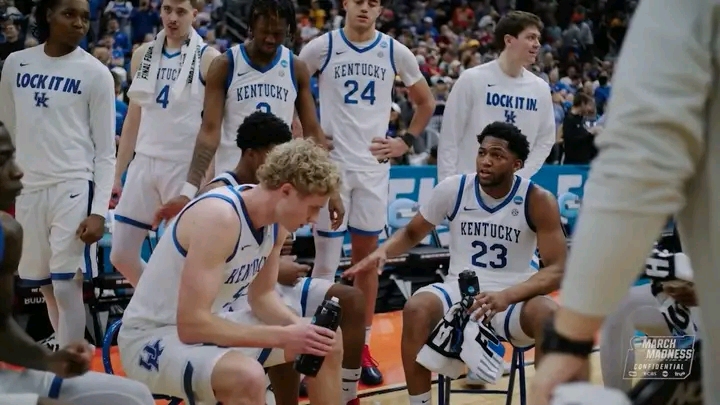
Kentucky is going all-in on the transfer portal—but there’s a reality quietly looming behind the strategy that few want to say out loud.
In today’s college basketball landscape, the portal isn’t just a tool—it’s the foundation. And for Mark Pope, building a competitive roster in his first year at Kentucky means moving fast, targeting proven talent, and reshaping the team almost overnight. On paper, it makes sense. Experienced players, immediate impact, fewer unknowns.
But here’s the uncomfortable truth: building through the portal comes with a risk that doesn’t always show up until it’s too late—chemistry.
It’s easy to look at individual pieces and get excited. Players like Miles Byrd bring elite defensive ability. Others in the portal offer scoring, size, or veteran leadership. Stack enough of those pieces together, and the roster starts to look dangerous.
But basketball isn’t played on paper.
When you assemble a team made up largely of transfers, you’re asking for cohesion to happen fast—sometimes instantly. These are players coming from different systems, different coaching styles, different expectations. They haven’t grown together. They haven’t failed together. And most importantly, they haven’t built trust through time.
That’s the gamble.
Kentucky isn’t just adding a few transfers to complement a core—they’re relying on the portal to define the core itself. And while that can absolutely work, it also leaves very little margin for error. If the pieces don’t fit, if roles aren’t clearly defined, or if egos clash, things can unravel quickly.
We’ve seen versions of this before—not just at Kentucky, but across college basketball. Talented rosters that looked loaded in the offseason but struggled with consistency once the games started. The difference between potential and production often comes down to chemistry, communication, and buy-in—things that can’t be rushed.
And yet, Kentucky may not have a choice.
The pressure to win immediately is real. The expectations in Lexington don’t allow for long rebuilds or slow development. The portal offers a shortcut—a way to reload instead of rebuild. But shortcuts, by nature, come with risks.
There’s also the question of identity.
What kind of team will Kentucky be? Defensive-minded? Fast-paced and offensive? Balanced? When a roster is built quickly through the portal, establishing a clear identity can take time—and early-season struggles often follow while players figure it out.
That’s where someone like Miles Byrd becomes so important. Not just for his talent, but for what he represents. A defensive anchor. A tone-setter. A player who can help define how Kentucky wants to play. Landing pieces like that can help stabilize a roster that might otherwise feel like a collection of parts rather than a unified team.
Still, even with the right additions, the underlying risk doesn’t disappear.
The Wildcats are betting that talent and experience will come together quickly enough to meet expectations. They’re betting that players will buy in, accept roles, and form chemistry under pressure. They’re betting that the portal can deliver not just pieces—but a team.
It’s a bold strategy. In many ways, it’s the modern blueprint for success.
But it’s also a fragile one.
Because if the chemistry doesn’t click, if the identity doesn’t form, or if the pieces don’t quite fit, the entire plan can stall before it ever fully takes off.
And that’s the part nobody wants to talk about.
Kentucky’s ceiling may be high—but so is the risk.
