


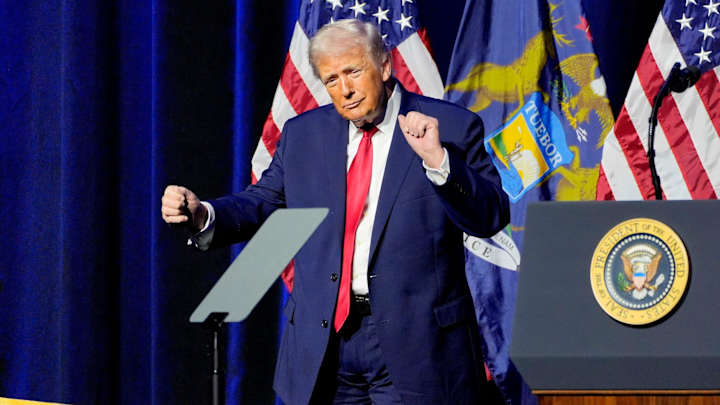
A new wave of proposed changes to college athletics—backed by former President Donald Trump—could significantly reshape the NCAA landscape. If these reforms are implemented and survive legal challenges, they could create a major advantage for Kentucky head coach Mark Pope.
One of the biggest proposed changes is a stricter transfer policy. Players would be allowed just one penalty-free transfer during their undergraduate careers. Any additional transfer would require sitting out a season. The idea is to reduce constant movement and encourage long-term development within programs. For a coach like Pope, who emphasizes system-based play and player growth, this could be a perfect fit.
Another major shift is the introduction of a firm five-year eligibility window. Athletes would have five years to complete their playing careers, including one redshirt season. This would eliminate extended eligibility loopholes and create more structure for roster planning, something that could help programs like Kentucky build continuity.
Healthcare reforms are also included, with schools required to provide guaranteed medical coverage for all student-athletes. This would be a major step forward, particularly for athletes at smaller programs who may not have had consistent access to care.
Revenue sharing is part of the plan as well, but with strict rules. Schools must distribute funds in a way that protects non-revenue sports like women’s basketball, track, and soccer. Kentucky is already ahead in this area under athletic director Mitch Barnhart, having invested across multiple programs. These changes would push other schools to follow suit, helping level the playing field.
Perhaps the most controversial element is the crackdown on NIL. The proposal would eliminate “pay-for-play” deals from boosters and collectives, aiming to stop programs from essentially buying recruits. NIL opportunities would still exist but under tighter regulation. There would also be new rules to protect athletes from exploitative agents and poor financial advice.
Enforcement would involve several federal agencies. The Department of Education and General Services Administration would monitor compliance, while the Attorney General and Federal Trade Commission would handle penalties. And those penalties would be serious—schools that violate the rules could lose federal funding, including grants and contracts.
That level of enforcement could finally bring real accountability to college sports, something the NCAA has struggled to achieve.
However, there is still uncertainty about whether these changes would hold up in court. Similar efforts have faced antitrust challenges, and this proposal could run into the same issues.
Even with those concerns, the push for reform is gaining traction. If changes like these are eventually implemented, they could bring more structure and stability to college athletics—and put Mark Pope and Kentucky in a strong position to benefit.
