


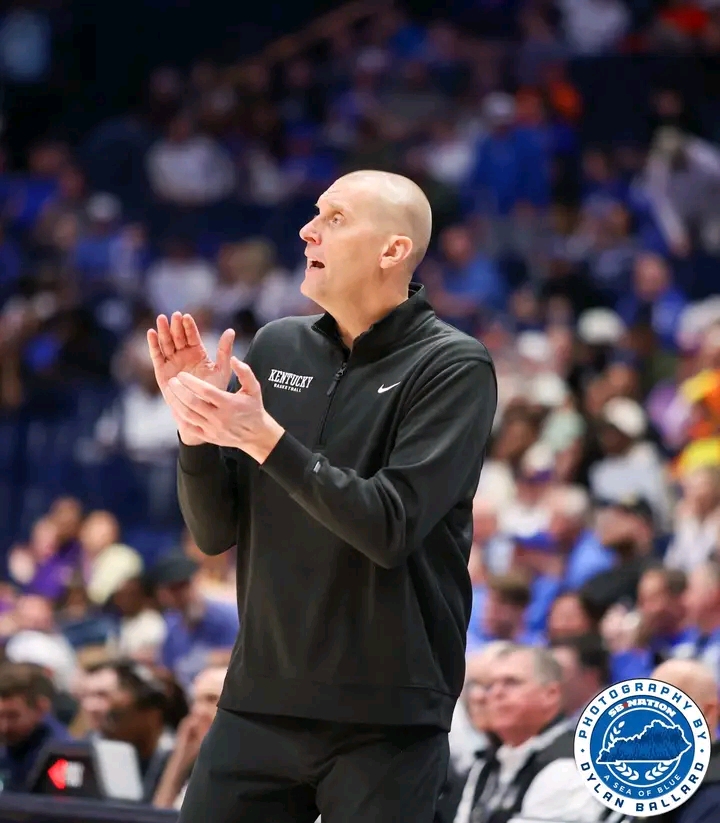
Mark Pope finally addressed Kentucky’s inconsistencies during his weekly radio show—but instead of easing concerns, his comments may have intensified them.
“I like them (shot decisions). Shooting is just what it is. It comes and goes. We’re a good three-point shooting team. I think we’ll make shots in the NCAA tournament,” Pope said.
For a team that has struggled from beyond the arc all season, that level of confidence feels risky. Kentucky’s three-point shooting hasn’t just been inconsistent—it has been a persistent issue that continues to show up in big moments.
Pope also explained his decision to cancel the program’s traditional Selection Sunday watch party, choosing instead to keep things private within the team.
“It’s actually the only moment we’ve had the entire season where it has just been us… to have some very personal, private conversations and to take in the moment,” he said.
While that decision may have been about team bonding, it also raised eyebrows, especially with the NCAA Tournament approaching and major questions still unanswered—particularly about shooting.
Statistically, Kentucky’s struggles are hard to ignore. The Wildcats are shooting around 34% from three-point range this season. More concerning, without Collin Chandler’s contributions, that number drops to roughly 28.5%. That lack of perimeter efficiency has allowed opposing defenses to adjust, focusing heavily on Chandler while daring others to shoot.
The recent trend doesn’t inspire much confidence either. Over the last five games, Kentucky’s shooting from deep has been consistently underwhelming:
• Texas A&M (loss): 8-for-26
• Florida (loss): 8-for-23
• LSU (win): 6-for-22
• Missouri (win): 6-for-21
• Florida (loss): 5-for-23
Those numbers suggest this isn’t just a cold stretch—it’s a pattern.
Pope’s offensive system is built around spacing the floor and using the threat of the three-pointer to open driving lanes. When shots fall, it creates opportunities for players like Otega Oweh and Denzel Aberdeen to attack the basket effectively. But when they don’t, defenses collapse into the paint, making it harder to score and increasing the likelihood of turnovers.
That’s been Kentucky’s reality in recent weeks. Without consistent shooting, the offense often turns into isolation plays, leading to mixed results and stalled possessions.
Now, the Wildcats head into a matchup against Santa Clara—a team known for applying pressure and capitalizing on mistakes. If Kentucky continues to struggle from deep, that pressure could quickly become overwhelming.
Pope may believe the shots will eventually fall, but March doesn’t wait for teams to figure things out. If Kentucky can’t find answers from the perimeter, his confidence could end up being misplaced—and it might cost them their season.
