


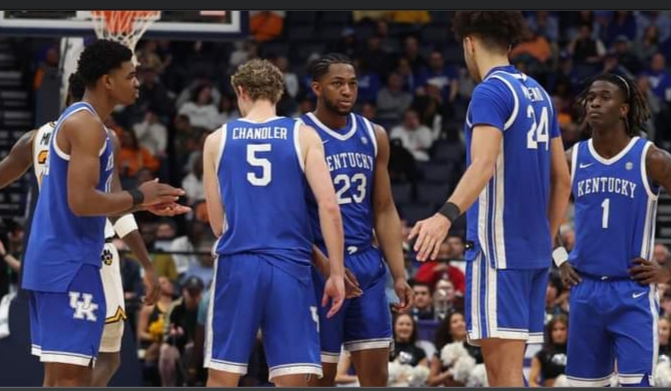
Last offseason, Yaxel Lendeborg was one of the most sought-after players in the transfer portal, and Kentucky made a serious push to bring him to Lexington. The versatile forward checked nearly every box for Mark Pope’s system — a player capable of scoring, rebounding, passing, and stretching the floor.
Despite Kentucky’s strong pursuit, Lendeborg ultimately committed to Michigan. At the time, many fans believed the Wildcats simply could not compete financially because of NIL limitations tied to JMI Sports. However, Lendeborg’s recent comments revealed a surprising truth: money was never the issue.
Kentucky’s aggressive NIL offer
In a recent interview with the Associated Press, Lendeborg shared just how serious Kentucky’s offer was.
“They started the number with $7 to $9 million,” Lendeborg said.
For a program that many believed was struggling to compete in the NIL landscape, that figure completely changes the conversation. Kentucky was clearly willing to make a massive financial commitment to land the talented forward.
Yet even with that kind of money on the table, Lendeborg chose Michigan.
What convinced him to choose Michigan
According to Lendeborg, Michigan head coach Dusty May took a very different approach during the recruiting process. Instead of focusing on NIL deals or financial incentives, May’s pitch centered on long-term development and preparing him for a professional future.
Lendeborg explained that he began thinking about the long-term impact of his decision and whether chasing money could potentially hurt his career.
He said that May never focused on the financial side of things. Instead, every conversation revolved around helping him improve as a player and achieve his long-term goals.
That message ultimately made the difference.
Kentucky’s recruiting pitch raises questions
Lendeborg’s comments raise an uncomfortable question for Kentucky: if money wasn’t the problem, then what is?
For months, many fans blamed JMI and NIL limitations for missed recruiting opportunities. But Lendeborg’s revelation suggests the issue may lie somewhere else — possibly in the way the program presents its vision to recruits.
Mark Pope has publicly emphasized the pride and tradition that come with playing at Kentucky. However, if NIL becomes the primary selling point during recruiting conversations, it can change how players view the program.
Instead of seeing Kentucky as a place for long-term development, recruits may begin to see it as a short-term financial opportunity.
The impact on team mentality
This type of recruiting approach can also affect team culture. Players who are primarily motivated by NIL deals may not always have the same level of investment in team success.
Kentucky’s current roster has already acknowledged struggles with focus this season. Some fans have begun wondering whether the motivations behind certain recruiting decisions could be playing a role in those issues.
By contrast, last year’s roster was built under different circumstances, with players who were focused heavily on development and proving themselves on the court.
Recruiting challenges continue
Lendeborg’s comments also come at a time when Kentucky’s recruiting results have raised concerns among fans. The Wildcats currently have no commitments in the 2026 class, and several highly regarded prospects have slipped away late in the process.
Players such as Christian Collins, Tyran Stokes, and Taylen Kinney were once seen as strong Kentucky possibilities before ultimately choosing other programs.
These missed opportunities have increased pressure on the coaching staff to adjust its recruiting strategy.
The pressure on Mark Pope’s staff
Mark Pope entered the Kentucky job with a reputation for building strong culture and developing players. To strengthen the recruiting effort, he added experienced recruiters like Jason Hart and Alvin Brooks III to his staff.
However, recruiting at Kentucky carries enormous expectations, and results on the trail will always be closely scrutinized.
A turning point for Kentucky recruiting
Lendeborg’s explanation offers a rare look into how top players evaluate programs in the modern college basketball landscape. NIL opportunities are important, but they are not always the deciding factor.
For Kentucky, the lesson may be clear: money can open doors, but the message behind the program still matters just as much.
