


College basketball has officially entered uncharted territory, and nobody is pretending otherwise anymore.
What began as transfer portal chaos and COVID-era eligibility extensions has morphed into something far more difficult to define. NIL money exploded, enforcement disappeared, and now schools are openly testing the limits of what “college basketball player” even means. Revenue-sharing was supposed to stabilize things, but with no real rules — and no appetite for punishment — the sport continues drifting further from anything recognizable.
The latest twist? Professional players finding their way back to college basketball.
Baylor added James Nnaji, the No. 31 overall pick in the 2023 NBA Draft. Oklahoma brought in a Russian pro center midseason. Utah signed a Spanish pro guard. BYU went a step further, adding a former G-Leaguer with more than 50 professional games under his belt. All of it happened quietly, quickly, and legally — at least for now.
Coaches are treating the holiday break like a waiver wire, and the NCAA’s response hasn’t exactly discouraged them.
In a statement released to Jeff Goodman, the NCAA essentially acknowledged that eligibility rules are being challenged — and overturned — across the country. With courts invalidating regulations and Congress being asked to intervene, the governing body admitted it’s largely powerless to stop the chaos.
Translation: it might not be allowed, but good luck enforcing it.
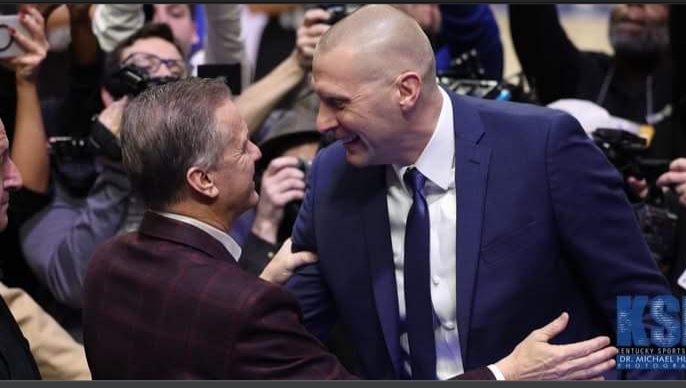
That brings us to Kentucky — and new head coach Mark Pope — who has already seen his program dragged into speculation involving NBA players and two-way contracts.
Pope’s message? Pump the brakes.
“There’s got to be in the high 80 percent range of things you see on social media about Kentucky recruiting that are just wrong,” Pope said during his radio show Monday night. “A lot of it is people trying to raise their profile or gain leverage. We hear things and just shake our heads.”
Pope emphasized that Kentucky will continue to evaluate every possible avenue, but he made it clear that much of what fans read online has little connection to reality.
“That’s one of the beautiful things about being at Kentucky,” he added. “Everybody’s talking about it. Very little of it is accurate — but it’s fun.”
Still, Pope admitted the current moment is something he never imagined confronting as a college coach. The idea that players with NBA experience — even those who have been drafted — could return to college basketball was once unthinkable.
Now, it’s part of the job.
“I don’t know that we’re in a place to say whether it’s right or wrong,” Pope said. “It’s complicated. But it’s happening fast, and it’s creating real problems. Coaches just need to know what rules we’re supposed to follow.”
While Pope is focused on clarity, John Calipari is focused on principle.
After Arkansas’ win over James Madison, Calipari launched into a seven-minute rant that drew a hard line between professionals and student-athletes. He made it clear he doesn’t blame coaches for exploiting gray areas — he blames leadership for allowing them to exist.
“If you put your name in the NBA Draft and you stay in it, you shouldn’t be able to play college basketball,” Calipari said. “I don’t care where you’re from. If you got drafted, you’re done.
Calipari argued that eligibility rules should be universal and black-and-white, not selectively enforced or quietly ignored. His broader concern? The erosion of opportunities for high school players as older, more experienced professionals enter the college game.
“We don’t have any rules,” he said bluntly. “That’s the problem.”
The rant touched on everything from paying players to prioritizing youth, and it felt like the culmination of years of frustration bubbling over.
“I wish you wouldn’t have asked me that question,” Calipari joked afterward, knowing full well he had plenty to say.
In the end, Pope and Calipari aren’t as far apart as they might seem. One is navigating the chaos with caution. The other wants to burn it down and rebuild it correctly. Both agree on one thing:
College basketball desperately needs answers — because right now, nobody knows where the line is, or if it even exists anymore.
And until it does, anything feels possible.
