


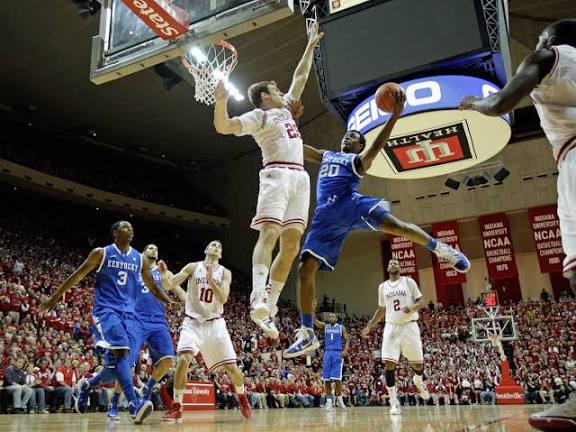
When Indiana and Kentucky agreed in 2023 to revive one of college basketball’s most storied rivalries, the matchup was expected to feature the star power of Mike Woodson and John Calipari. Two years later, the landscape looks dramatically different — new coaches, new rosters, and two programs searching for direction rather than dominance.
Back on November 24th, Kentucky sat at No. 19 in the AP Poll while Indiana held the No. 25 spot, setting up what looked like a showdown between rising forces. Fast forward to now, and both teams have tumbled out of the rankings, entering Saturday’s matchup desperate for a résumé-boosting win before league play kicks into gear.
Here are the three biggest storylines heading into the clash:
The Records Tell a Complicated Story
Kentucky’s fall from an early Top 10 ranking to unranked status stems from four losses by December 5th — including two nationally televised blowouts. Mark Pope’s ambitious strength of schedule explains part of the slide, but inconsistency has been Kentucky’s biggest enemy.
The Wildcats’ résumé features respectable losses to Louisville and North Carolina — both within 10 points — but also a 17-point defeat to Michigan State and an eye-opening 35-point meltdown against Gonzaga that sparked frustration across Big Blue Nation.
Despite the turbulence, Kentucky still sits slightly ahead of Indiana in KenPom and remains a narrow favorite at home. The issue? Kentucky has been non-competitive in half its games against high-major opponents, making them one of the most unpredictable teams in the country.
Kentucky’s Defense: Solid Foundation, Costly Flaws
Statistically, the Wildcats grade well on both ends of the floor, and Pope’s second year has given him time to establish his system while injecting five-star and transfer talent into the roster.
But the cracks are real — and Indiana may be equipped to pry them open.
Kentucky allows assists on 59.9% of opponent baskets, ranking outside the top 300 nationally. In wins over Kentucky, Gonzaga, Michigan State, and Louisville all racked up 20+ assists. Meanwhile, Indiana assists on 67.5% of its made buckets — one of the best marks in college basketball.
Additionally, Kentucky struggles to force turnovers, especially non-steal turnovers, again ranking below 300th nationally. While the Wildcats do an excellent job protecting the ball themselves, they lack the disruptive defense that has troubled Indiana at times this year.
This gives the Hoosiers a clear blueprint: move the ball, keep the pace steady, and make Kentucky react rather than dictate.
Mark Pope’s Year Two vs. Darian DeVries’ Year One
While the rivalry is returning, the programs are in very different stages of reconstruction.
Pope entered the season with continuity — roughly 29.5% of last year’s minutes returning — along with a top-10 recruiting class and high expectations that Kentucky would be a March contender. The talent is undeniable; the cohesion is not.
Indiana, meanwhile, has zero returning players from last season. DeVries has essentially built a roster from scratch and is barely ten games into his tenure. What Indiana lacks in continuity, it has tried to replace with energy, ball movement, and defensive intensity.
On paper, Kentucky remains the more talented roster. In practice, the Wildcats are still searching for rhythm, confidence, and identity.
Saturday’s matchup will highlight the contrast:
A roster Pope has molded and expected to win now
vs.
A roster DeVries has assembled on the fly and hopes to develop long-term
The first of four scheduled meetings between these teams under their new coaches won’t just revive a rivalry — it will reveal which program is truly beginning to find its footing.
If Kentucky’s experience and talent finally click, it could reassert itself as a contender. But if Indiana’s cohesion and ball movement expose the Wildcats’ defensive flaws, the Hoosiers could send a loud message that their rebuild is farther along than expected.
Either way, the rivalry’s return arrives at the perfect moment: two teams hungry to prove who they are — and who they’re becoming — in the next era of college basketball.
