


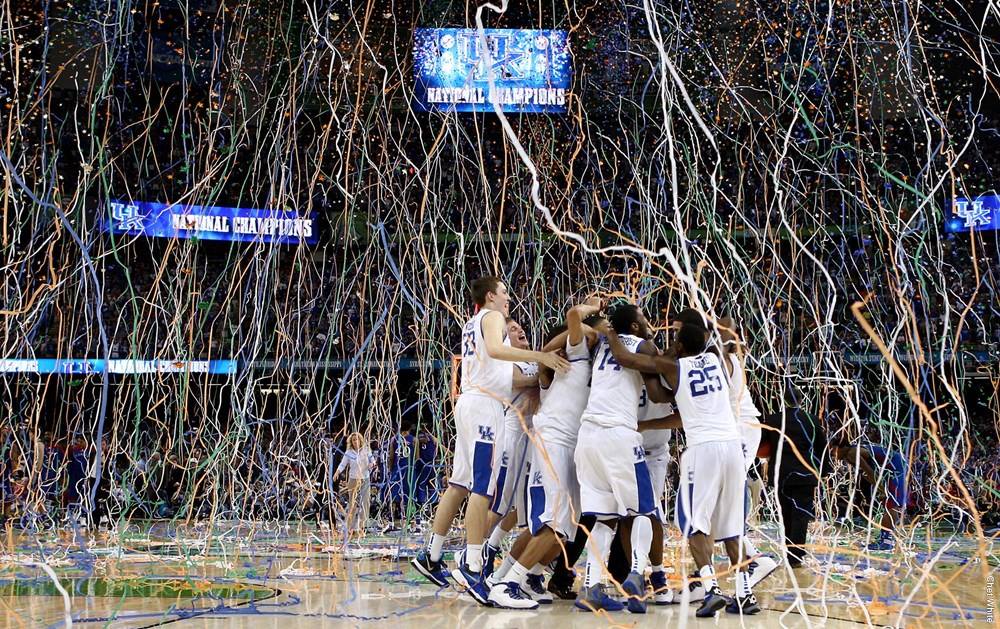
College basketball has its legends. Programs that rise, burn bright, and fade away. But then there’s Kentucky — a program that doesn’t just live in history, it is history. The Wildcats are basketball’s eternal flame, carrying a tradition that has outlived players, coaches, and eras.
No one captured that better than Al McGuire, the Hall of Fame coach and broadcaster, who once remarked about Kentucky:
“They had it before you, they had it during you, they’ll have it when you’re gone.”
Those words weren’t just flattery. They were truth. Kentucky Basketball has existed at a level few can comprehend — an empire that was built generations ago and still thrives today.
The Dynasty’s Roots: Adolph Rupp and the Birth of a Powerhouse
The foundation of Kentucky’s greatness begins with Adolph Rupp, who took over in 1930 and turned a small-town program into a national force. His teams didn’t just win — they dominated. By the time his tenure ended, Rupp had collected four NCAA Championships, 27 SEC titles, and had created the first true college basketball dynasty.
In those days, Kentucky basketball was bigger than the sport itself. Their sharp warmups, packed arenas, and national attention set the standard that others would chase. Every coach that followed — Joe B. Hall, Rick Pitino, Tubby Smith, John Calipari — was tasked with carrying forward the empire that Rupp built.
And remarkably, they all did.
The Golden Eras Keep Coming
What makes Kentucky unique is that their greatness isn’t confined to one golden stretch — it comes in waves.
The Rupp Years (1930s–1970s): 876 wins, four national titles, and a program cemented as the sport’s most feared name.
The 1978 Champs: Joe B. Hall stepped out of Rupp’s shadow to deliver a title led by Jack Givens and Rick Robey.
The 1990s Revival: Rick Pitino resurrected the Cats, built “The Untouchables” in 1996, and delivered another championship in 1998 under Tubby Smith.
The Calipari Era (2009–Present): John Calipari brought in the modern one-and-done era and turned Lexington into an NBA factory. His 2012 championship team, led by Anthony Davis, remains one of the most dominant squads of all time.
Each generation had its own heroes, but they all added to the same legacy: Kentucky wins. Kentucky lasts.
Players Come and Go, But the Program Stays
One of the remarkable truths about Kentucky basketball is how it remains larger than its stars. From Dan Issel to Jamal Mashburn, Tayshaun Prince to Anthony Davis, John Wall to Devin Booker, and countless others — the program has never belonged to just one man.
That’s the beauty of it: players pass through Lexington, but the tradition remains. The banners don’t come down. The fans don’t leave. The roar of Rupp doesn’t fade.
Every new recruit knows it: you’re joining something that was great before you, and will still be great long after.
Big Blue Nation: The Heartbeat of the Legacy
No discussion of Kentucky basketball is complete without mentioning its lifeblood — Big Blue Nation. The fans are unlike any in sports. They don’t just watch Kentucky basketball, they live it.
From lining up at Rupp Arena, to turning the SEC Tournament into a “home game” every March, to traveling nationwide for NCAA Tournament runs — the devotion is unmatched. Kentucky isn’t just a program. It’s an identity.
Generations of families pass it down: grandparents who saw Rupp’s glory days, parents who lived through Pitino’s revival, kids who grew up idolizing Anthony Davis or De’Aaron Fox. For Kentucky fans, basketball isn’t a season — it’s a way of life.
The Standard of College Basketball
In college hoops, programs rise and fall. Duke, UNC, Kansas, UCLA — all have had dominant stretches. But Kentucky’s dominance is everlasting.
8 National Championships (second-most in history).
17 Final Fours.
Over 2,300 wins — the most in NCAA history.
Countless NBA stars.
That’s not luck. That’s a culture. That’s a standard.
Kentucky doesn’t just compete — it sets the bar. Every other program measures itself against the Wildcats.
“They’ll Have It When You’re Gone”
Al McGuire’s quote wasn’t meant as prophecy — it was observation. Kentucky has always had “it.” Call it swagger, dominance, mystique, or just plain greatness. And they always will.
Players may stay for one year or four. Coaches may come and go. Eras may shift. But the Kentucky tradition? That’s forever.
As long as there’s college basketball, there will be Kentucky.
Because they had it before. They have it now.
And they’ll always have it.
