


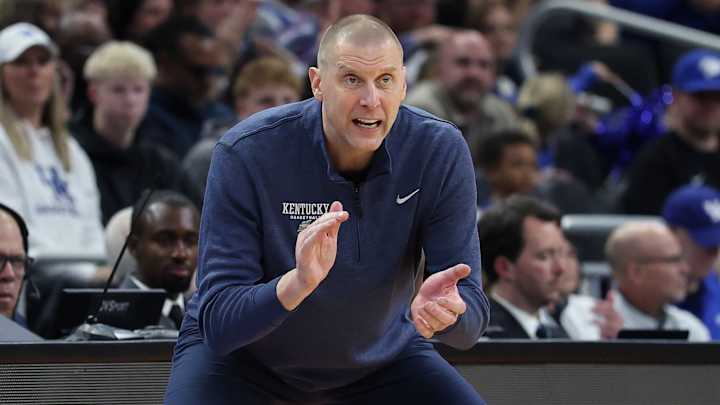
College basketball is almost unrecognizable from just a decade ago. The transfer portal spins nonstop, NIL deals dominate headlines, and rosters can be rebuilt in a matter of weeks. For many veteran coaches, this new landscape feels like a nightmare.
But not for Kentucky’s Mark Pope.
While some of the biggest names in college sports are lamenting the loss of tradition, Pope is leaning all the way in. To him, this isn’t the end of college basketball—it’s the beginning of something bigger.
> “I believe it’s the greatest time to be a college coach,” Pope recently said. “It’s the most challenging, but also the most rewarding. The players need us more than ever before.”
That line sums up Pope’s philosophy perfectly. Where others see chaos, he sees opportunity.
A Game Divided: Coaches React to the NIL + Portal Era
The numbers are staggering. In 2025 alone, more than 2,600 players entered the transfer portal—an all-time record. That’s nearly 20% of Division I scholarship players switching schools in one offseason. Add in NIL collectives and agents, and recruiting now feels more like free agency than tradition.
For some legendary coaches, it’s a bitter pill.
Tom Izzo (Michigan State) called the system broken, blaming NCAA leadership and warning that middlemen now chase short-term paydays instead of player development.
Nick Saban, before retiring at Alabama, admitted the game he believed in for 50 years “no longer exists,” claiming recruiting had devolved into “whoever can pay the most.” His wife even noticed recruits cared more about money than family values.
Steve Alford (Nevada) called the whole system “utterly ridiculous,” saying rosters now flip like junior colleges and education takes a backseat to NIL payouts.
For these coaches, the frustration isn’t about athletes earning money—it’s about losing the purity they once believed defined college sports.
Pope’s Counterpunch: Opportunity, Not Chaos
Pope sees it differently. Instead of resisting the changes, he views them as a chance to redefine the role of a college coach.
“Players are navigating things none of us dealt with at their age,” Pope said. “If we can be there to help them grow, on and off the court, then this can be the most rewarding era of coaching we’ve ever seen.”
Look no further than Kentucky forward Trent Noah, whose growth under Pope has already become a talking point inside the program. For Pope, NIL and the transfer portal aren’t roadblocks—they’re tools.
And Kentucky is uniquely built to thrive in this model. With one of the sport’s largest fanbases, deep NIL backing, and unmatched tradition, the Wildcats offer players both visibility and financial opportunity. Pope’s willingness to embrace change plays right into those strengths.
Why Pope’s Attitude Matters
In coaching, mindset spreads. A leader who views NIL as a burden sends that negativity through his program. A coach who embraces it creates a culture of adaptability and growth.
The reality is clear:
Over 2,600 portal entries in 2025.
NIL deals worth seven figures for top players.
Nearly 20% of Division I players changing schools in one offseason.
This isn’t going away. Coaches who adapt will survive. Coaches who fight it will be left behind.
The Future: Shaped by Visionaries
The future of college athletics will likely get even more complicated before it stabilizes. Lawsuits about athlete employment are ongoing, revenue-sharing models are looming, and roster turnover shows no signs of slowing down.
But Pope’s refusal to back down is what separates him. He doesn’t yet have Izzo’s Hall of Fame résumé or Saban’s championships, but he does have something vital in 2025—vision.
He isn’t mourning the loss of the past. He’s building a blueprint for the future.
As many coaches ask what the sport has lost, Mark Pope is asking what it still can become. At Kentucky—a program that has reinvented itself before—his willingness to embrace the chaos might just be the Wildcats’ biggest competitive advantage in the years ahead.
