


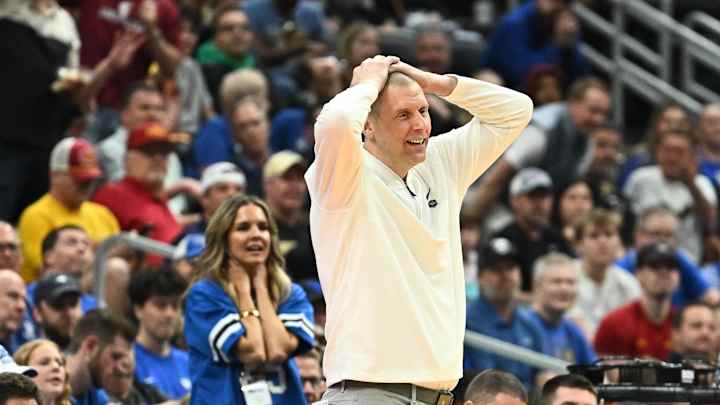
Mark Pope didn’t just recruit Collin Chandler—he built a connection that went far beyond basketball. From identifying his potential as a teenager to waiting through a two-year mission and personally welcoming him back, Pope saw Chandler as a foundational piece of his Kentucky vision. This wasn’t just another roster addition; it was a long-term investment built on trust, belief, and continuity.
That’s what makes this moment so significant.
Chandler’s decision to enter the transfer portal—reportedly with a strong push toward BYU and a massive NIL opportunity—has quickly become one of the most defining moments of Pope’s tenure so far. Not just because of the talent Kentucky is losing, but because of what it represents in today’s college basketball landscape.
When relationships meet reality
For years, fans have held onto the idea that strong relationships between coaches and players could still outweigh outside factors. Pope and Chandler felt like the perfect example of that belief—a bond that could survive anything the modern game threw at it.
But NIL has changed the rules.
Chandler’s reported request for Kentucky to match a lucrative homecoming offer wasn’t unreasonable from his perspective. As a newly married player with deep ties to Utah, the chance to play close to home while securing a life-changing financial deal is something few could turn down.
And that’s where the situation shifted from emotional to transactional.
Why Kentucky had to say no
Despite Chandler’s importance, Kentucky wasn’t in a position to meet every demand. After investing heavily in the previous roster, the program is now operating with more structure and limits. Committing a massive portion of resources to one player—no matter how valuable—would have created bigger issues across the roster.
So Pope made the toughest decision a coach can make: choosing sustainability over sentiment.
It’s a move rooted in logic, but one that still leaves a noticeable void. Chandler wasn’t just a contributor—he brought chemistry, leadership, and a presence that helped shape the locker room.
The lesson that changes everything
This exit has become more than just a transfer—it’s a reality check.
It shows that no relationship, no matter how strong, is immune to the financial forces now driving college basketball. The idea of loyalty being enough to keep a player in Lexington is quickly fading, replaced by a system where opportunity and economics often take priority.
For Pope, this is a defining learning moment. It reinforces that building a roster today requires more than talent evaluation and relationship-building—it demands constant adaptation to a shifting market.
What comes next for Kentucky
Replacing Chandler won’t be simple, especially this late in the process. Kentucky now has to pivot quickly, searching for players who can not only fill statistical gaps but also bring the kind of cohesion Chandler provided.
But beyond roster adjustments, this moment will likely shape how Pope approaches everything moving forward—from recruiting to retention to resource allocation.
Because in the end, this wasn’t just about losing a player.
It was about understanding the new reality of college basketball—and realizing that even the most trusted pieces can become the ones who teach you the hardest lessons.
