


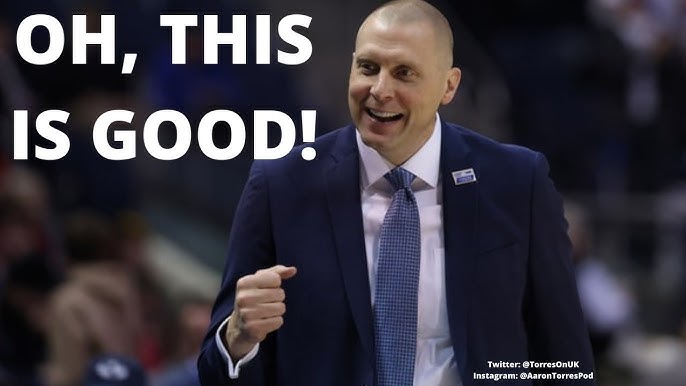
Mark Pope didn’t need a full season to figure it out—but unfortunately, that’s exactly what it took. Kentucky’s 2025-26 campaign unraveled in frustrating fashion, and when you strip everything down, one issue stands above the rest: this team had no true playmakers.
In a program where expectations are sky-high and patience runs thin, that’s simply unacceptable.
Pope himself said there’s “nowhere like Kentucky basketball,” and he’s right. That passion from the fanbase comes with pressure—and after a 14-loss season, the margin for error this offseason is gone. Fixing the roster isn’t optional anymore. It’s urgent.
Offseason mistakes that haunted the season
To be fair, Pope didn’t ignore the need at point guard. He had a plan.
Acaden Lewis was supposed to be part of that solution—a promising young guard who eventually chose Villanova, where he went on to average 12 points and 5 assists per game as a freshman. That production would have changed everything for Kentucky. But concerns over role and minutes pushed him elsewhere, and that decision came back to haunt the Wildcats.
From there, Pope turned to the transfer portal, targeting several guards like Dedan Thomas, Donovan Dent, and Silas Demary Jr. One by one, they all said no.
Eventually, Kentucky landed Jaland Lowe—but by then, the options were already thinning.
Then came the decision that truly defined the season: Pope chose not to bring in a reliable backup point guard.
Instead, he tried to patch the position together. Collin Chandler, Denzel Aberdeen, and freshman Jasper Johnson were all asked to handle responsibilities they weren’t fully prepared for.
The results were exactly what you’d expect—struggles bringing the ball up, difficulty initiating offense, and a complete lack of rhythm.
Aberdeen, naturally a scoring guard, was forced into a playmaking role. He competed, but asking him to run the offense limited what he does best. Even then, he led the team with just over 3 assists per game—the lowest for a Kentucky team leader in over a decade.
That tells you everything.
The numbers don’t lie
Kentucky’s offensive struggles weren’t just visible—they were measurable.
The Wildcats ranked:
87th nationally in effective field goal percentage
158th in three-point shooting
Those aren’t just bad numbers for Kentucky—they’re alarming.
And the root cause wasn’t just missed shots. It was how those shots were created—or more accurately, not created. Passes were late. Offensive sets stalled. Shooters were forced into tough looks. Too often, the wrong players were taking the shots at the wrong times.
That’s what happens when you don’t have a true floor general.
The path forward is obvious
Mark Pope has already acknowledged the problem. He knows this team desperately needs playmakers.
Now comes the hard part: fixing it.
As the transfer portal opens, Kentucky’s priority couldn’t be clearer. They need a proven guard who can control the game, create opportunities for others, and bring structure to the offense. Not a makeshift solution. Not another experiment.
A real point guard.
Because if this season proved anything, it’s that talent alone isn’t enough. Without someone to organize it, lead it, and elevate it, even the most talented roster can fall apart.
And at Kentucky, that’s not a mistake you get to make twice.
