


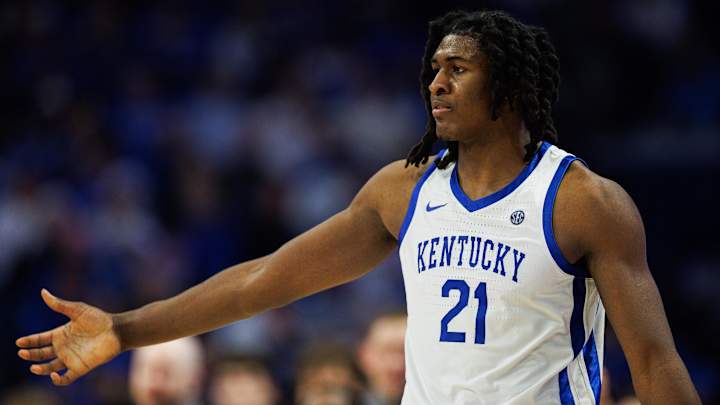
Dan Issel doesn’t speak lightly when it comes to Kentucky basketball. As the program’s all-time leading scorer, his words carry serious weight—and this time, they came with sharp criticism aimed directly at Jayden Quaintance.
During a recent radio appearance, Issel voiced frustration that many Kentucky fans have quietly shared. He pointed to Quaintance’s limited impact this season, questioning both his performances in the few games he played and his complete absence afterward. For Issel, it wasn’t just about injuries—it was about how everything unfolded.
The optics have only added fuel to the fire. Quaintance reportedly received around $2 million in NIL money but appeared in just four games. If he shows up fully healthy at the NBA Combine and performs without restrictions, many fans will inevitably question whether he chose to protect his draft stock instead of returning to the court.
But the situation isn’t that simple.
Quaintance was dealing with serious knee injuries, including a torn ACL, torn meniscus, and a fracture—far from minor issues. Reports indicate he pursued multiple treatment options in an effort to return, but his body never fully cooperated. For a young player with a potential NBA future, rushing back under those conditions carries real risk.
That’s why the focus shouldn’t stop with the player.
If there’s frustration to go around, a significant portion belongs to Mark Pope and the staff that built the roster. Investing heavily in a player recovering from multiple major injuries was always a gamble. Tying a large chunk of the team’s expectations and NIL budget to that uncertainty only increased the risk.
Looking back, it’s a decision that has backfired.
Issel’s comments reflect what many fans are feeling, especially given the lack of return on such a major investment. But placing all the blame on an 18-year-old navigating injuries and career decisions overlooks the bigger picture.
Players will always prioritize their health and future.
It’s the program’s responsibility to manage risk, build depth, and protect its investment. In this case, Kentucky—and Mark Pope—fell short.
