


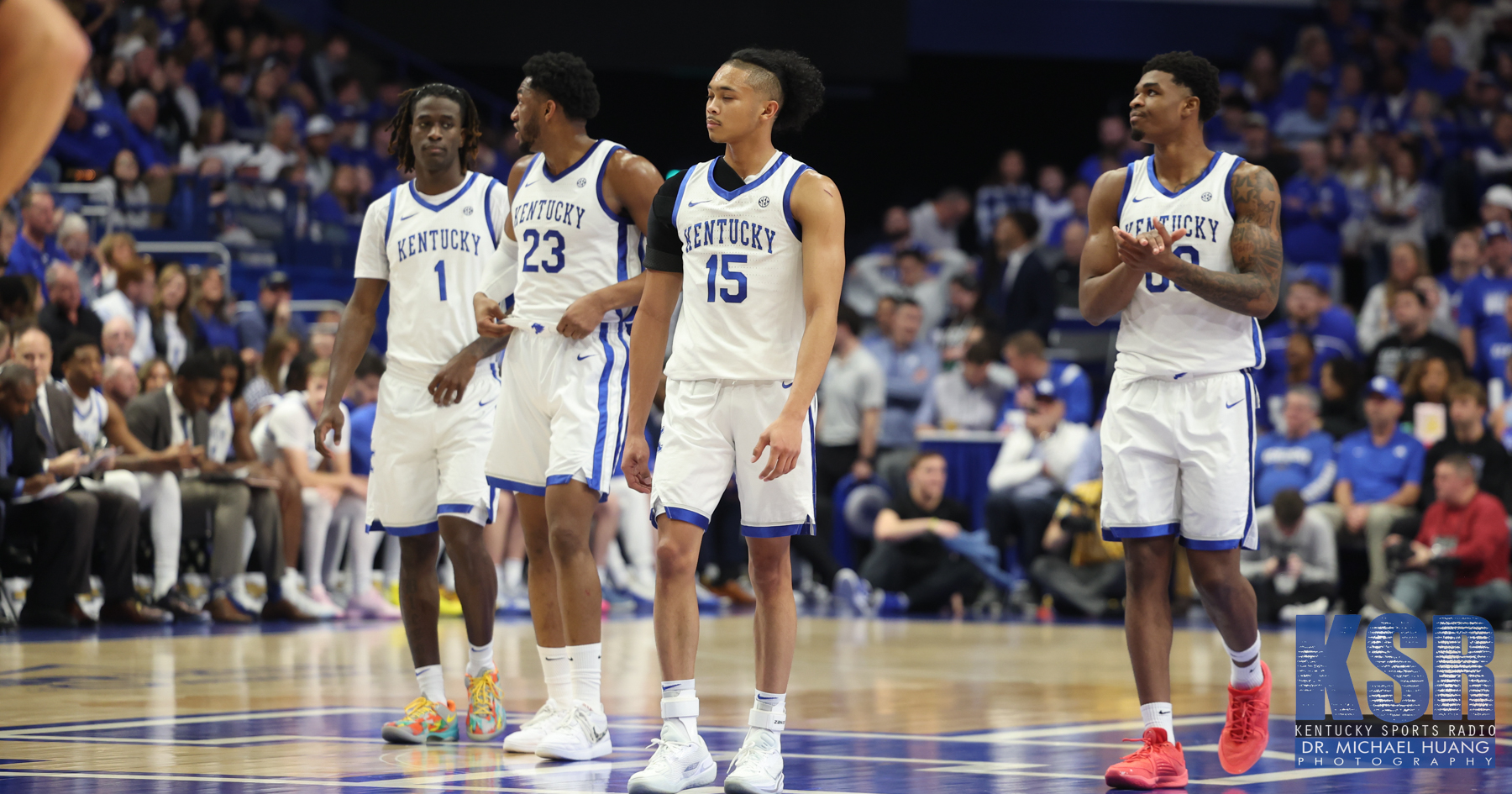
Kentucky’s struggles at the point guard position over the past two seasons haven’t just been bad luck — they’ve completely reshaped the team’s identity, often for the worse.
In year one under Mark Pope, injuries derailed everything early. Lamont Butler and Kerr Kriisa both battled health issues, forcing Jaxson Robinson into an unfamiliar lead guard role before he, too, suffered a season-ending wrist injury. At one point, 7-foot center Amari Williams even had to help facilitate the offense — a clear sign of how desperate things had become.
Year two didn’t offer much relief. Highly touted freshman Acaden Lewis unexpectedly decommitted just days before the transfer portal closed, leaving Kentucky scrambling. Denzel Aberdeen was added late as a replacement, joining Jaland Lowe in the backcourt. But roster instability struck again — Travis Perry transferred out, and Lowe went down with a season-ending shoulder injury after just nine games.
That left Aberdeen, naturally more of a scoring guard, as the team’s primary ball handler. While he adapted admirably, the shift disrupted the entire offense. Jasper Johnson, another natural scorer, was also forced into point guard duties, taking both players out of their comfort zones.
Pope made it clear the plan was never supposed to look like this.
Kentucky originally believed it had built a strong, balanced backcourt. Lewis and Lowe were expected to complement each other perfectly, and Perry added valuable depth. But unexpected departures and injuries turned what looked like a strength into a season-long weakness.
The ripple effects were significant. Without true creators — players who can generate their own shots and create for others — Kentucky’s offense became limited. Ball movement suffered, scoring became inconsistent, and perimeter shooting declined.
That weakness was fully exposed in the Wildcats’ NCAA Tournament loss to Iowa State, where 20 turnovers and a lack of offensive control led to a blowout defeat.
Now, fixing that issue is at the top of Pope’s offseason priority list.
He emphasized the need for “creators” — players who can handle pressure, make plays, and elevate teammates. By internal metrics, Kentucky simply didn’t have enough of those players this season, especially after injuries forced key contributors into unfamiliar roles.
As Kentucky heads into a crucial offseason, one thing is clear — solving the point guard problem isn’t optional anymore. It’s the key to everything Pope wants to build next.
