


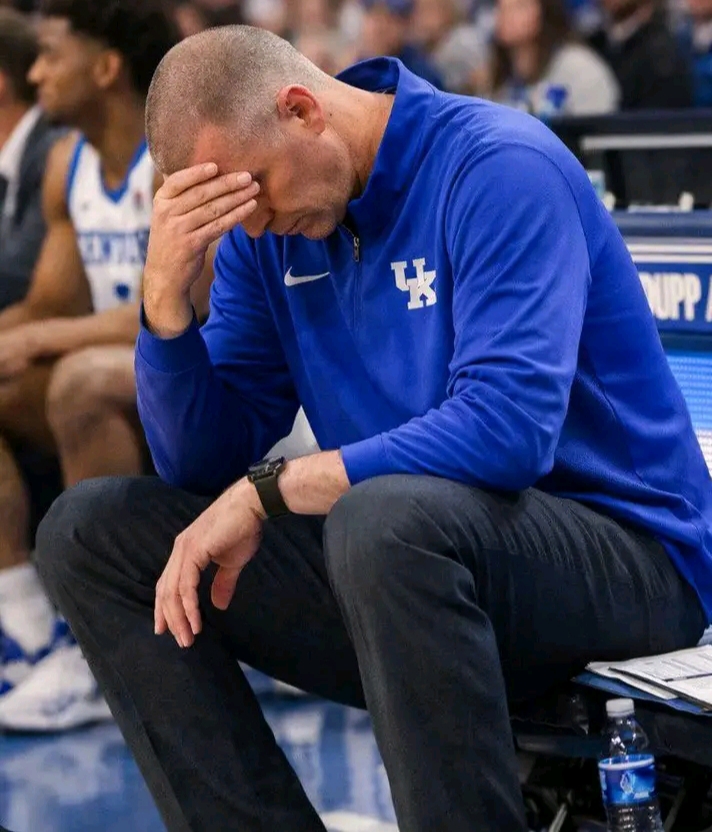
Mark Pope stood on the sideline with his arms crossed as Kentucky’s season slipped away, watching a team built with enormous expectations fall flat in an 82-63 loss to Iowa State. When it was over, he quietly walked off, barely glancing at the stat sheet handed to him — he already knew what it said.
This season never unfolded the way Kentucky planned.
The Wildcats entered the year with what was widely believed to be the most expensive roster in college basketball history, reportedly costing around $22 million. But injuries and roster instability quickly derailed that vision. Key players like Jayden Quaintance and Jaland Lowe barely played together, and another expected contributor, Acaden Lewis, never made it to campus after decommitting.
“We never got to run with the roster we thought we had,” Pope said.
That may be true — but it doesn’t fully explain what went wrong.
After an impressive first season built on chemistry and offensive flow, Pope aimed to upgrade Kentucky with more size, athleticism, and defensive intensity. Instead, the changes disrupted the identity that made his system work. The result was a team that struggled to consistently execute, especially against elite competition.
Against Iowa State, those issues were obvious.
Kentucky started strong but quickly lost control as turnovers piled up and ball movement disappeared. The Wildcats finished with 20 turnovers and just 11 assists, falling into isolation-heavy play that played right into Iowa State’s defensive pressure.
Pope’s frustration was visible, urging his team to move the ball and simplify their approach. But the rhythm never returned.
As the offense stalled, the defense followed — and the effort dropped.
Meanwhile, Iowa State — built with far fewer resources — looked more cohesive and disciplined. Even without its best player, the Cyclones controlled the game with structure, effort, and continuity.
That contrast highlighted a growing concern: Kentucky didn’t just spend big — it may have spent poorly.
Instead of landing multiple elite, NBA-level talents, the Wildcats assembled a roster with limited high-end upside. Only a couple of players project to reach the NBA soon, and one of them barely saw the court due to injury.
For a $22 million investment, that’s a disappointing return.
Pope deserves some leeway. Injuries clearly played a role, and it’s fair to wonder how things might have looked with a fully healthy roster. But even then, questions remain about whether this team truly had championship potential.
Now, the pressure intensifies.
Kentucky has now gone six straight NCAA Tournaments without reaching the Elite Eight — the longest drought in program history. At a place with national title expectations, that’s simply not good enough.
Pope acknowledged that reality.
“This is the greatest place in the world to play basketball,” he said. “But it comes with pressure. Winning a couple of tournament games isn’t the standard here.”
Moving forward, Kentucky must find a better formula — one that combines elite talent with the right system fit. Spending big isn’t the problem. Spending smart is.
Because in today’s college basketball landscape, money can build a roster — but it can’t guarantee results. And at Kentucky, results are the only thing that matter.
