


Otega Oweh’s deep, game-tying three-pointer will be remembered as one of the most electrifying moments of March Madness — but what happened just seconds before that shot has sparked a heated debate across the college basketball world.
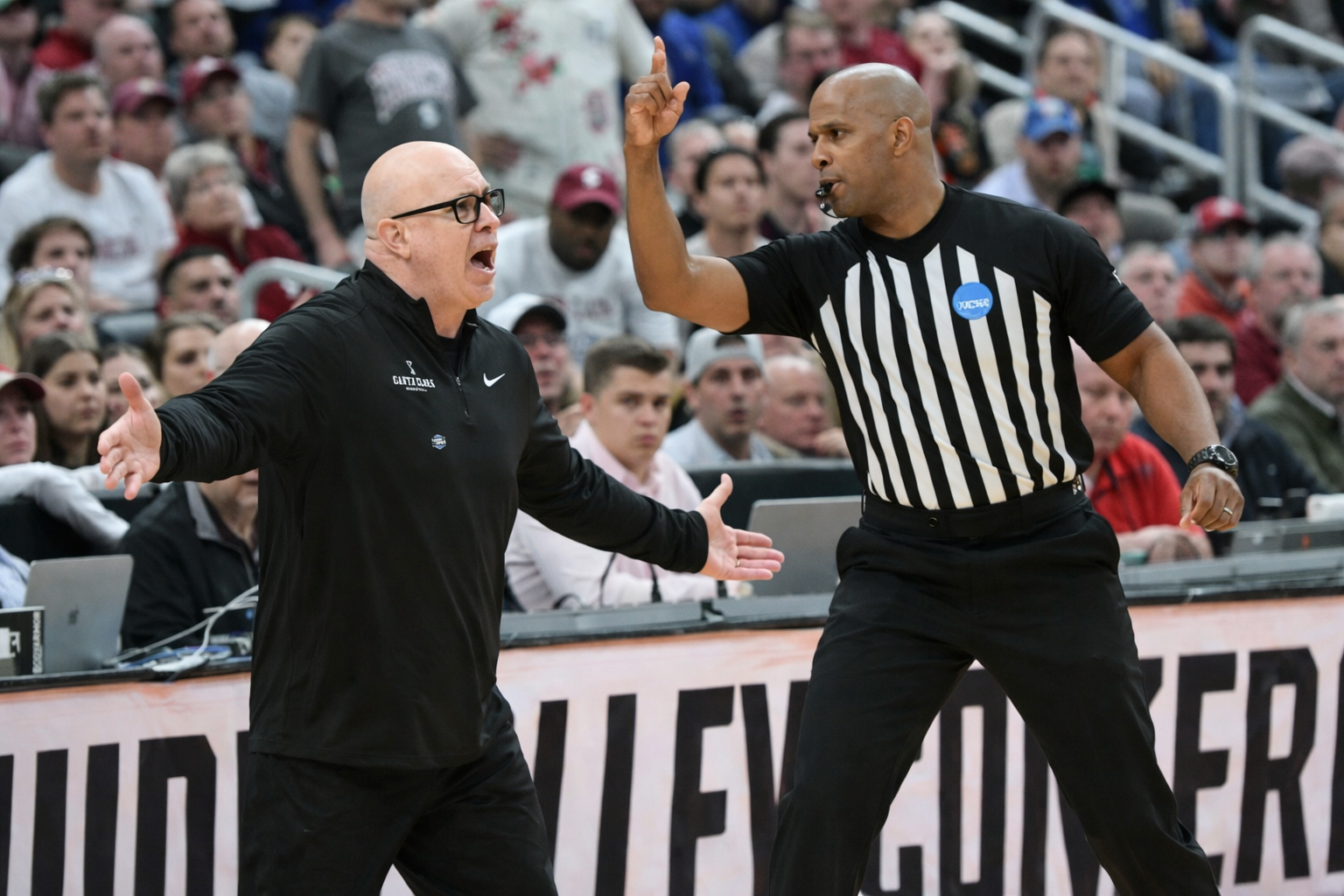
With Santa Clara leading 73-70 late in regulation, Allen Graves knocked down a clutch three to put the Broncos in control. As the ball dropped through the net, head coach Herb Sendek immediately began signaling for a timeout from the sideline. But to the surprise of many, the officials didn’t grant it.
After the game, Sendek didn’t hold back.
“I unequivocally called a timeout. But they didn’t grant it,” he said, clearly frustrated by the no-call.
At first, it looked like Santa Clara had been denied a crucial opportunity to regroup and set up defensively. Fans quickly questioned whether the referees had made a costly mistake in a high-pressure moment.
But the reality is far more nuanced — and ultimately, it supports the officials’ decision.
According to NCAA rules, a timeout can only be granted when a team has clear possession of the basketball. While that may sound straightforward, the timing in this situation is everything. When a made basket is still passing through the net, neither team technically has possession.
That brief window is where the game turned.
Kentucky’s Denzel Aberdeen reacted instantly, grabbing the ball as it came through the net and stepping out of bounds to inbound it. The moment he secured the ball, possession belonged to Kentucky — not Santa Clara.
By the time Sendek was signaling for the timeout, it was already too late.
Former Auburn head coach Bruce Pearl later explained the sequence, noting that if Sendek had called the timeout just a split second earlier — before Aberdeen touched the ball — the officials would have likely granted it.
But Kentucky’s quick awareness erased that opportunity in an instant.
Instead of a stoppage, the Wildcats pushed the ball up the floor. Seconds later, Oweh launched a 32-footer that found nothing but net, tying the game at 70 and sending the arena into chaos.
What looked like a controversial no-call was actually a textbook example of timing and rule enforcement. The officials didn’t miss the moment — Kentucky simply beat Santa Clara to it.
In the end, the play wasn’t defined by a mistake from the refs, but by Kentucky’s split-second execution under pressure — a sequence that led directly to one of the most unforgettable shots in tournament history.
