


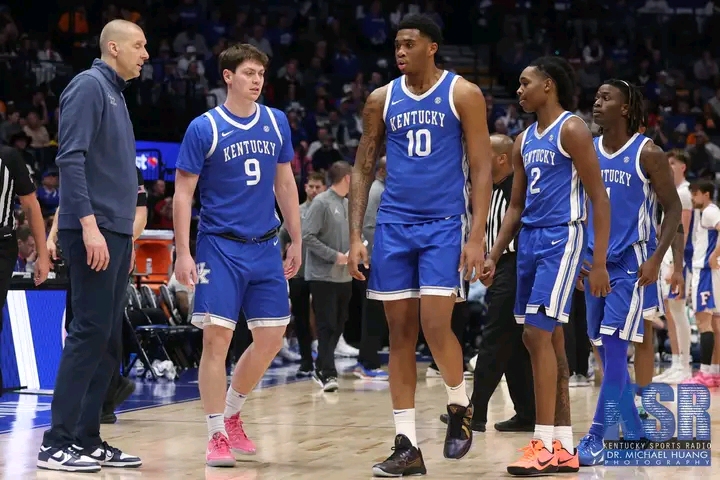
March Madness is built on matchups, momentum, and the smallest of edges—and sometimes, those edges have nothing to do with talent or seeding. As Kentucky prepares to face Santa Clara in St. Louis on Friday, one subtle but potentially game-changing factor is already looming in the background.
Tip-off is set for 12:15 p.m. ET, which seems routine on the surface. But for Santa Clara, that translates to 9:15 a.m. Pacific Time. That’s not just early—it’s far outside the normal rhythm of a college basketball team that has spent nearly the entire season playing on the West Coast.
Body clocks matter more than most fans realize. Players are creatures of habit, especially when it comes to game-day routines. From pregame meals to warmups and mental preparation, everything is built around familiar timing. Now, Santa Clara will be forced to compress and adjust that routine in a high-pressure NCAA Tournament environment. That kind of disruption can show up in different ways—slow starts, missed shots, defensive lapses, or simply a lack of early-game energy.
What makes this situation even more concerning for the Broncos is their lack of experience outside their geographic comfort zone. This game will be just their second appearance all season east of Albuquerque, New Mexico. That’s an incredibly small sample size for a tournament team. Even more surprising, Santa Clara has played only six games total outside of California, Oregon, and Washington.
In other words, this is a team that hasn’t had to deal with long travel, time zone shifts, or unfamiliar environments very often—if at all. Now they’re being thrown into all of it at once, on one of the biggest stages in college basketball.
History also suggests this could be a real issue. The earliest game Santa Clara has played this season came at 2:00 p.m. PT back in December. That alone is nearly five hours later than Friday’s tip-off in terms of their internal clock. In that game, they fell 80-78 to Loyola Chicago—a team ranked 280th in KenPom at the time. While one game doesn’t define a trend, it does highlight how uncomfortable earlier starts have been for this group.
On the other side, Kentucky should be far more comfortable with the setup. Playing in the Eastern Time Zone, the Wildcats won’t face the same biological or logistical hurdles. Their routine remains largely intact, and that familiarity could allow them to come out more focused and energized from the opening tip.
That contrast could be critical in the first few minutes of the game. If Kentucky jumps out to an early lead while Santa Clara is still trying to adjust, it could force the Broncos into a reactive mode—something that’s difficult to overcome in a tournament setting where every possession matters.
There’s also the mental aspect. For a Santa Clara program that hasn’t been to the NCAA Tournament since 1996, this is already unfamiliar territory. Add in the early start, travel demands, and a high-profile opponent like Kentucky, and the challenge becomes even steeper. Nerves and discomfort can compound quickly if things don’t go right early.
Of course, none of this guarantees an outcome. Teams have overcome time zone disadvantages before, and once the game settles in, execution and talent will ultimately decide the result. But in a single-elimination format, even the smallest disruption can tilt the balance.
For Kentucky, this is an opportunity. Not a flashy one, not one that will dominate headlines—but a real, tangible edge that could shape how the game unfolds. If the Wildcats capitalize early, they may be able to turn this subtle advantage into a decisive one.
And if that happens, the difference might not be what Kentucky did—but what Santa Clara couldn’t adjust to in time.
