


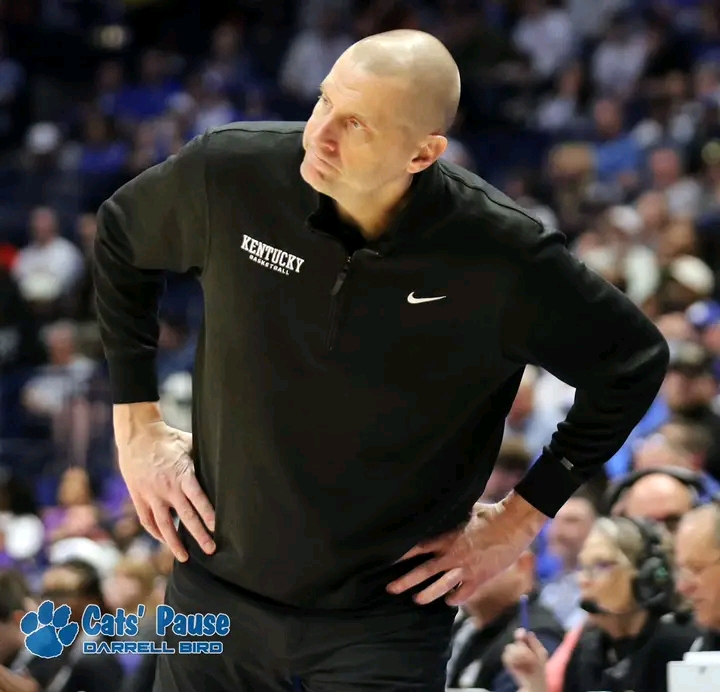
Kentucky basketball fans are no strangers to high expectations, but the frustration surrounding the program often overshadows the reality of its recent trajectory. Following Friday’s SEC Tournament loss to Florida, Kentucky coach Mark Pope offered updates on key players Malachi Moreno and Kam Williams. While injuries and roster issues are certainly part of the conversation, the bigger story for UK supporters isn’t just about who’s on the floor—it’s about perspective and understanding the roots of Kentucky’s recent struggles.
Since parting ways with John Calipari two years ago, the narrative has often been framed as a “who’s winning the divorce” contest. Last weekend, Calipari added to the scoreboard by guiding Arkansas to the SEC Tournament title in Nashville. For fans still fixated on the former coach, that win might feel like a blow—but in reality, it shouldn’t. Kentucky’s current frustrations are largely the result of the program’s trajectory in the final four years of the Calipari era (2020–2024), not the start of the Pope era.
Calipari’s Razorbacks benefited from a favorable bracket, defeating the SEC Tournament’s No. 11 seed Oklahoma, No. 15 seed Ole Miss, and No. 4 seed Vanderbilt on their way to the championship. Fans can’t help but recall 2018, when Kentucky, as a No. 5 seed, had a similar opportunity in the NCAA Tournament South Region. That year, the Cats were the highest-seeded team to reach the region semifinals but lost to No. 9 Kansas State, which ultimately fell to No. 11 Loyola, highlighting how luck and bracket dynamics can shape perception.
It’s worth looking beyond headlines to assess the numbers under Pope compared to Calipari’s final seasons:
• Wins over AP Top 25 teams: In two seasons, Pope has led Kentucky to 13 wins over ranked opponents, going 13-15 overall. By contrast, Calipari’s final four seasons produced 11 wins, with an 11-18 record against Top 25 teams.
• SEC Tournament performance: Pope is 3-2 in the conference tourney, while Calipari was 1-4.
• NCAA Tournament results: Pope’s Cats have gone 2-1 in the tournament; Calipari’s final four seasons saw UK go 1-3, including one year completely missing the tournament.
Numbers like these reveal a simple truth: Kentucky’s struggles predated Pope, and he inherited a program already in decline. When Pope took over prior to the 2024–25 season, there were no scholarship players, and the team was mired in four consecutive years of subpar results. Despite these challenges, Pope’s first season was promising. Kentucky played an entertaining style, claimed key rivalry wins, and reached the NCAA Sweet 16, all while battling a slew of injuries to key contributors.
The second season (2025–26) has been more challenging, marked by roster construction issues, injuries, and a style of play that hasn’t always captured fan enthusiasm. However, the Cats have still produced notable victories, including two wins over Tennessee and triumphs over former coach John Calipari and basketball legend Rick Pitino, demonstrating that progress under Pope is measurable even amid frustration.
What UK fans must understand is that Pope’s success—or failure—should not be measured against Calipari’s current achievements at Arkansas. Instead, it should be evaluated based on his ability to rebuild Kentucky into a healthy, consistent, and competitive program. The critical lessons from the 2025–26 season, particularly in roster construction and player development, will shape the 2026–27 team and beyond.
The narrative that Pope is struggling while Calipari thrives is more a product of perception than fact. Kentucky fans would be better served focusing on the present and future of their program, rather than dwelling on what might have been under Calipari. Pope’s tenure, though still young, has shown flashes of promise and resilience that suggest Kentucky is on a path to reestablishing itself among college basketball’s elite—if given the time and patience to overcome injuries and roster challenges.
