


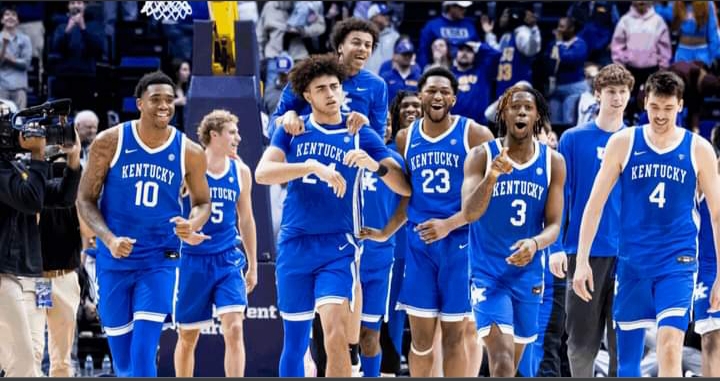
The Kentucky Wildcats have had a rollercoaster season, finishing 19-12, and multiple players are pointing to an issue that goes beyond the fatigue cited by head coach Mark Pope: selfishness on the court.
When Pope took over at Kentucky, his first-year team thrived on fluid ball movement and selfless play, creating an offense that was both dynamic and unpredictable. That style energized fans and made Kentucky a team to watch. But this season, consistency has been elusive. The offense has often stalled, and defensive lapses have compounded the problem. While Pope has frequently cited fatigue as the culprit, players are offering a different perspective.
After Kentucky’s recent loss to Florida, Pope emphasized tired legs and mental exhaustion. “We make poor decisions when we’re tired on the floor. We just do. We’re trying to figure out how to fix it. That’s been a problem the last couple of games,” he explained. Fatigue, according to Pope, has caused turnovers, missed rotations, and poor shot selection.
Yet players like forward Andrija Jelavic disagree. “No, it’s not fatigue,” he said bluntly. “Everyone plays at the same pace Monday, Tuesday, Wednesday. That’s not the problem. Some guys don’t touch the ball for 2-3 minutes, and they just need to be mature, not childish. Know the game will come to them and don’t force it.” Jelavic’s words suggest that individual decision-making and mindset, not physical exhaustion, have been the underlying issues.
Brandon Garrison echoed Jelavic, pointing to the effects of selfish play on team performance. “Playing together more, looking for each other more, not making so many selfish plays,” he said. “I feel like that hurts us. We play well for four minutes and then go back to selfishness.”
This tension between coach and players highlights a deeper issue for Kentucky: consistency. While flashes of brilliance occur—such as moments of crisp passing, fast breaks, and defensive stops—the Wildcats have rarely been able to sustain that level for a full game. Games often swing between moments of teamwork and stretches dominated by individualism, and this inconsistency has frustrated both fans and coaches alike.
Analysts argue that Kentucky’s struggles are partly due to the youth and inexperience on the roster. Several key players are still learning when to assert themselves and when to defer, which is common for teams relying heavily on freshmen and transfers. Still, the message from Jelavic and Garrison is clear: maturity and unselfishness are just as important as stamina.
With the postseason approaching, Kentucky cannot afford more lapses. A single game of poor decision-making or selfish play could end their season prematurely, regardless of talent. The Wildcats will need to reconcile the differences between coach and players, find their rhythm, and commit to playing as a team if they hope to make a deep March run.
Ultimately, this season is about more than wins and losses. It’s a test of character, patience, and adaptability. Whether fatigue is a real factor or not, Kentucky’s players are making it clear that selfishness is the problem—and it’s one they’ll need to solve before it’s too late.
