


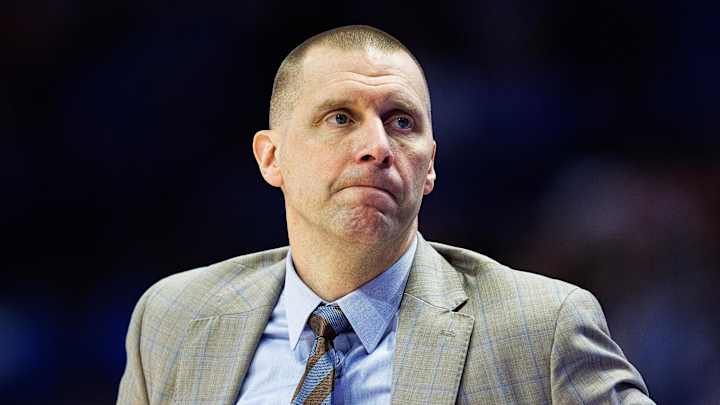
Kentucky didn’t lose to Georgia because of a lack of talent. They didn’t lose because they were outmatched on paper. They lost momentum — and many believe one decision from Mark Pope changed the entire night.
The Wildcats opened the game sharp. The energy was there. The execution followed. Rupp Arena felt alive. But once Pope began rotating heavily and adjusting minutes, the rhythm shifted. Georgia settled in. Kentucky stalled. And from that point forward, the Bulldogs looked like the steadier team.
After the game, Pope pointed to fatigue once again.
“We gotta find a way to get our guys’ minutes down. Probably can’t have Otega at 38 and DA at 36. It’s just ’cause our actual performance suffers as those guys get fatigued.”
That explanation hasn’t sat well with fans.
Across college basketball, elite players routinely log 32 to 35 minutes — sometimes more — without a dramatic drop in production. Stars are expected to carry the load, especially in tight games. Otega Oweh, a preseason Player of the Year candidate, fits that description. On nights when the margin is thin, your best players often have to stretch.
Critics argue the issue wasn’t that Oweh played too much — it was when the substitutions happened. Kentucky had early control, but the rotation disrupted flow. Instead of riding the hot lineup and strategically stealing rest during media timeouts, the Wildcats appeared to lose continuity.
Defensively, the fatigue argument raises even more questions. Kentucky doesn’t run a relentless press. They primarily play trail coverage and avoid aggressive trapping unless it’s late-game desperation. It’s not a system built to exhaust players over 38 minutes.
The bigger concern? Consistency.
This roster is talented. On paper, it has the pieces to compete with anyone. Yet effort and execution fluctuate too often from possession to possession. Pope, who leans heavily on analytics, may be searching for something measurable to correct — and minutes are easy to quantify. But reducing playing time doesn’t automatically restore urgency or focus.
There’s still time to steady the season. The NCAA Tournament remains within reach. But losses like this shrink the margin for error — and magnify coaching decisions.
Right now, the frustration isn’t just about fatigue.
It’s about feel.
And in a game where momentum means everything, Kentucky fans are left wondering if the one decision meant to protect the team may have been the very one that cost them the game.
