


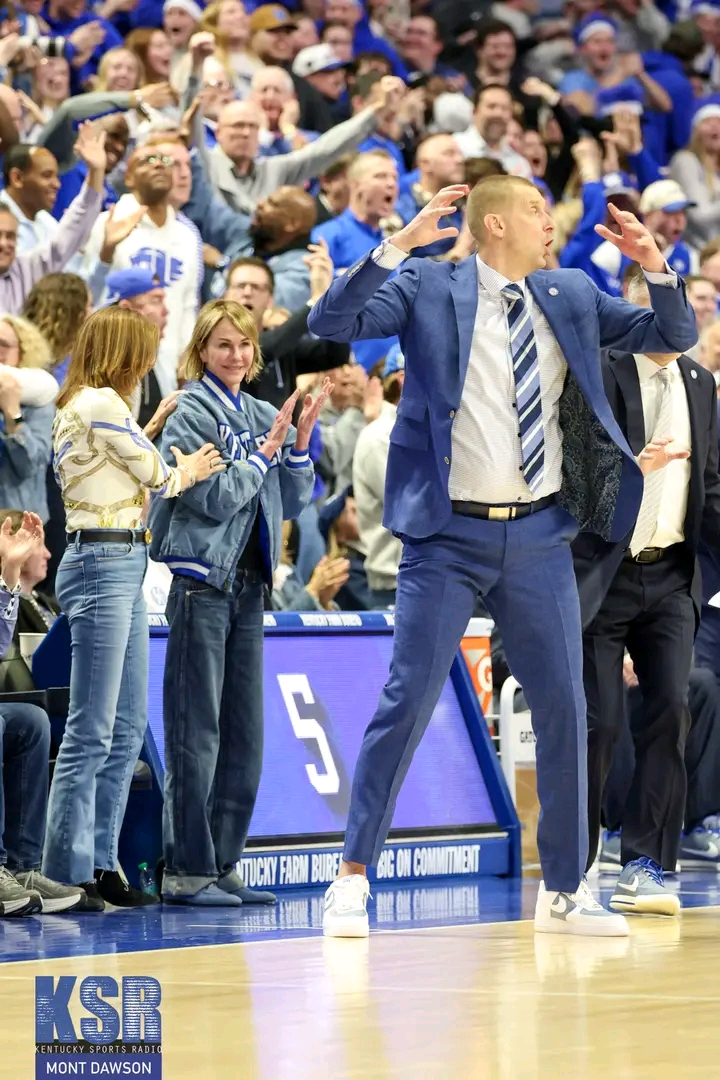
The Kentucky Wildcats have enjoyed plenty of success in Mark Pope’s short tenure as head coach. A Sweet 16 appearance, multiple wins over top-15 opponents, and aggressive work in the transfer portal have quickly reestablished Kentucky as a national contender.
But while the on-court product has impressed, one major concern continues to linger: high school recruiting.
Last season, Kentucky narrowly missed on several elite prospects, most notably Caleb Wilson, who is now thriving at North Carolina Tar Heels. The Wildcats managed to secure a pair of highly regarded in-state recruits, creating optimism that momentum could build on the trail.
That optimism has faded quickly.
As things stand, Kentucky appears in serious danger of striking out entirely in the 2026 class. Two prospects once considered near-locks — Tyrann Stokes and Christian Collins — are now trending toward other programs. Every primary target Kentucky has pursued this cycle has slipped away.
Naturally, fingers have pointed in several directions.
Some blame has landed on Kentucky’s NIL infrastructure and its partner organization JMI. However, recent developments suggest those may not be the core issues. Kentucky football, for example, continues to land high-level talent through the transfer portal without similar obstacles.
Even more telling: by most accounts, Kentucky spent as much money assembling this year’s basketball roster as any program in the country. That reality undercuts the idea that the university is unwilling to invest in elite talent.
Instead, the evidence increasingly points back to Pope’s philosophical approach.
Rather than funneling massive NIL packages to one-and-done high school stars, Pope appears to favor distributing resources across experienced players who can immediately contribute. His roster construction emphasizes depth, versatility, and shared minutes — a model that has produced wins, but may be less appealing to elite recruits seeking guaranteed roles and star-level usage.
There’s also the perception factor.
Pope has not yet established a strong track record of sending players to the NBA, something that remains a major selling point for top-tier prospects.
Taken together, Kentucky’s recruiting issues don’t appear to stem from institutional limitations or NIL reluctance. They look more like a direct reflection of Pope’s roster-building strategy.
Whether that approach ultimately proves sustainable is the bigger question.
For now, as long as Kentucky keeps winning and competing at a high level, the lack of five-star signatures may be tolerated. But at a program built on elite recruiting and NBA development, continued struggles on the high school trail will only grow louder — and place even more scrutiny on the man in charge.
