


The shove.
The postgame chaos.
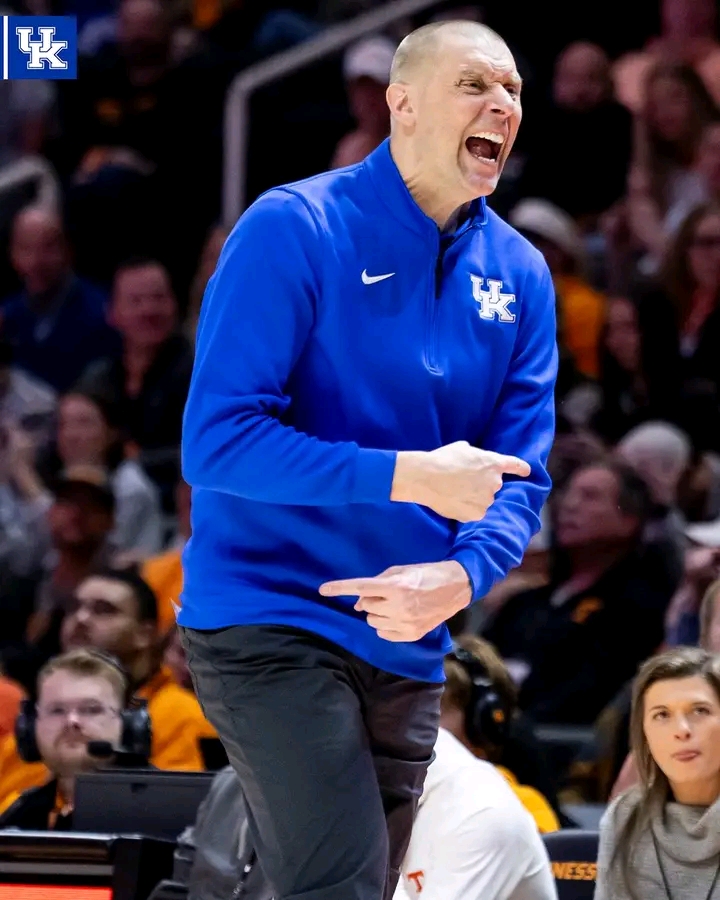
Mark Pope sprinting across the floor to pull players apart before things spiraled.
That’s what went viral after Kentucky stunned No. 24 Tennessee in Knoxville.
But while the fight dominated timelines, it completely overshadowed the real story — the coaching decision that quietly flipped the rivalry game on its head long before the final buzzer.
Because Kentucky didn’t just survive Tennessee.
They were outplayed, outcoached, and out-adjusted when it mattered most.
And it started with Mark Pope refusing to coach scared.
Down 17 in Knoxville — The Moment That Breaks Teams
Let’s be clear about the situation Kentucky was in.
Down 17 points in the first half
Playing in one of the loudest arenas in the SEC
Tennessee controlling the glass, the tempo, and the emotion
Kentucky struggling with turnovers and early defensive breakdowns
For most teams, this is where games quietly slip away.
This is where coaches tighten rotations, slow the offense, and hope the crowd settles.
Mark Pope did none of that.
Instead of shrinking, he doubled down on aggression — and trusted his roster in a way Tennessee never anticipated.
The Decision That Changed the Game: Trust Over Control
The turning point wasn’t a single play.
It wasn’t even a single timeout.
It was Pope’s decision to hand the keys to Denzel Aberdeen and let the offense flow through confidence, not caution.
Aberdeen had been solid early, but coming out of halftime, the message was obvious:
Attack. Shoot. Be decisive.
The results were immediate.
Aberdeen scored 18 of his 22 points in the second half
He buried three massive three-pointers
He attacked closeouts instead of settling
He forced Tennessee’s defenders into constant recovery mode
Within the first minute of the second half, Tennessee committed three fouls in 48 seconds.
That’s not coincidence.
That’s pressure.
Kentucky went from chasing the game to dictating it.
Pace Was the Real Adjustment
What made Pope’s move so effective wasn’t just who he trusted — it was how he changed the game.
Kentucky sped everything up.
Faster ball movement
Quicker decisions
More aggressive spacing
Guards attacking gaps instead of probing
Tennessee thrives when games are physical, slow, and controlled. Pope refused to play that game.
Instead, he turned the second half into a test of:
Decision-making
Conditioning
Poise under pressure
And that’s where the Vols cracked.
The Late Steal Wasn’t Luck — It Was Permission
When Collin Chandler jumped the passing lane late and fed Otega Oweh for the go-ahead layup, most people saw a hustle play.
What they didn’t see was coaching intent.
Pope had Kentucky aggressively jumping lanes all half. He wasn’t telling his guards to sit back and protect the lead — he was encouraging them to take calculated risks.
That’s huge.
In tight road games, most coaches preach “don’t make mistakes.” Pope preached make plays.
So when Tennessee hesitated late, Chandler didn’t hesitate at all.
Steal.
Dish.
Layup.
Kentucky’s first lead of the game — and the moment Knoxville went silent.
Why the Fight Became the Distraction
The postgame scuffle was emotional. Rivalry games always are. And Pope stepping in to shut it down showed leadership.
But focusing on that moment misses the bigger picture.
The real story was a coach who:
Stayed composed while trailing by 17
Trusted his players instead of over-managing
Adjusted pace instead of panicking
Empowered confidence on the road
That’s how Kentucky:
Won its fourth straight game at Tennessee
Secured its third straight victory overall
Proved this team is mentally tougher than its record suggests
The Bigger Takeaway for Kentucky
This win wasn’t just about one comeback.
It was proof of identity.
Kentucky showed:
They won’t fold under pressure
They trust their guards in hostile environments
They respond to coaching adjustments immediately
And Mark Pope showed something even more important:
He understands when to coach — and when to let players be fearless.
Everyone’s talking about the fight.
But this game was won by a decision made in a locker room, not a moment after the buzzer — and it might end up defining Kentucky’s season.
