


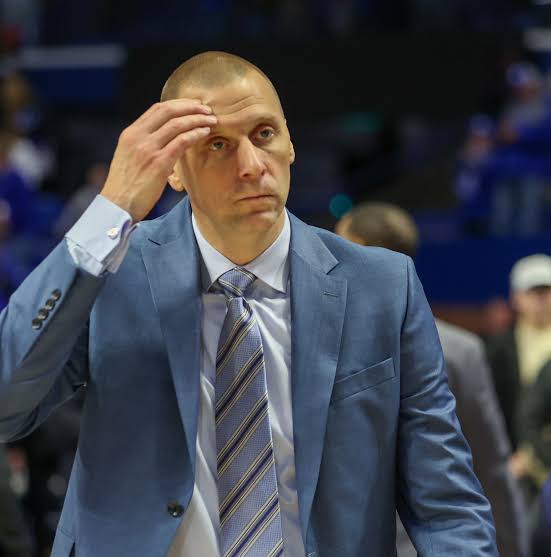
It wasn’t long ago—just over three months—when Mark Pope called his 2025–26 Kentucky men’s basketball roster “a beautiful Ferrari” he couldn’t wait to drive. Fast forward fifteen games, and it’s starting to feel more like a rusty sedan—with a driver still learning the ropes.
The Wildcats, reportedly carrying the highest-paid roster in college basketball, are now 9–6 overall and 0–2 in SEC play. Their latest stumble? A home loss to Missouri, where an eight-point lead vanished in under five minutes, sparking boos at Rupp Arena. So far, the team has suffered three losses by 15+ points, two blown leads at home, and has underperformed against mid-tier opponents like Tulsa, George Washington, and Wake Forest.
At this pace, Kentucky’s chances of earning a solid NCAA tournament bid are far from certain. Pope’s first 20 SEC games have produced a 10–10 record, including six double-digit losses and four at home. Add in zero commitments for the class of 2026, and Year 2 of Pope’s tenure, which followed an exciting debut season, feels closer to a car crash than a joy ride.
Meanwhile, John Calipari, essentially pushed out of Lexington, is building Arkansas into a program reminiscent of his Kentucky glory days. Point guard Darius Acuff, initially recruited while Calipari was at Kentucky, is dazzling fans with NBA-level creativity and speed. Sixth man Meleek Thomas and forward Trevon Brazile are also standout talents. Arkansas has only three losses, all narrow defeats on the road or neutral courts against top-15 teams. And let’s not forget, Calipari beat Pope at Rupp last season before both teams advanced similarly in the NCAA tournament
This isn’t to say Kentucky erred in letting Calipari go. Relationships run their course, and the move may have revitalized his career. But when you compare today’s Kentucky roster to the one from two years ago—packed with future top-10 NBA picks—can anyone confidently say the program is in a stronger position? And if not, Pope’s first 51 games can hardly be labeled a success, especially with programs like Arkansas and BYU surpassing Kentucky’s current standing.
Looking ahead to 2026–27, Kentucky may not need to fire Pope, but structural changes around him seem inevitable. A general manager could be essential to guide roster construction alongside Pope. Last season, Kentucky’s first portal addition, Tulane wing Kam Williams, committed while the Wildcats were still in the NCAA tournament. With the portal opening faster than ever, expecting coaches to juggle scouting, player development, and recruiting is unrealistic. Pope has had preliminary talks with potential GM candidates, but timelines remain uncertain—though recent losses could accelerate the process.
Any spring roster overhaul will be substantial. At best, Kentucky retains point guard Jaland Lowe (hopefully healthy) and center Malachi Moreno (who could emerge as an NBA prospect). A few role players might return, but the team currently lacks the star power and skill set Pope relied on at BYU. Portal misses on targets like Yaxel Lendeborg and Lamar Wilkerson, along with overpaying for players like Denzel Aberdeen or Mo Dioubate, have compounded the challenge.
Ultimately, Pope’s ability to ensure consistent effort from this season’s Wildcats is crucial for his future. While talent issues can explain some struggles, repeated low-effort plays are becoming a pattern—and in Kentucky, patterns define a coach. One season of inconsistency can be chalked up to circumstances; beyond that, it reflects on the head coach.
College basketball is unpredictable, and occasional regular-season losses aren’t usually a death knell. Yet the trend at Kentucky this year suggests deeper issues, threatening to put Pope’s seat in danger. Fans may soon ask the same question Ronald Reagan famously posed in 1980: Are you better off than you were four years ago? For Kentucky basketball, the current answer isn’t promising.
