


Kentucky’s loss at Alabama on Saturday stood out for a reason that went beyond the final score. For the first time this season, the Wildcats were essentially at full strength — and yet one of their most impactful role players barely saw the floor when the game was still competitive.
Kam Williams logged just six minutes in the first half and did not enter the game until more than ten minutes into the second half. By the time he checked back in, Kentucky was already staring at a sizable deficit.
That decision raised eyebrows, especially considering how important Williams had been in recent wins.
Against Indiana, the versatile 3-and-D wing played 24 minutes, scored nine points, and helped anchor a defensive effort that held the Hoosiers to just 4-of-24 shooting from three-point range. He followed that up with another strong showing against St. John’s, where he was part of a second-half lineup that sparked a decisive 14–0 run. Williams finished that game with 11 points in 20 minutes, knocking down two threes and consistently getting to the free-throw line.
Saturday followed a familiar pattern early. Williams played sparingly in the first half — similar to the St. John’s game — but unlike that contest, his role never expanded. He didn’t return until the 10:01 mark of the second half, with Kentucky trailing by 17 points.
Interestingly, once Williams was back on the court, Kentucky showed signs of life. The Wildcats managed to cut the deficit to single digits twice during his time on the floor, but poor execution across the roster prevented a serious comeback.
The limited usage was especially puzzling given the success of one particular lineup: Jaland Lowe, Otega Oweh, Kam Williams, Mo Dioubate, and Jayden Quaintance. That group had been instrumental in Kentucky’s win over St. John’s, logging extended minutes together and fueling a 10–0 run.
Against Alabama, that same lineup appeared together for just one minute.
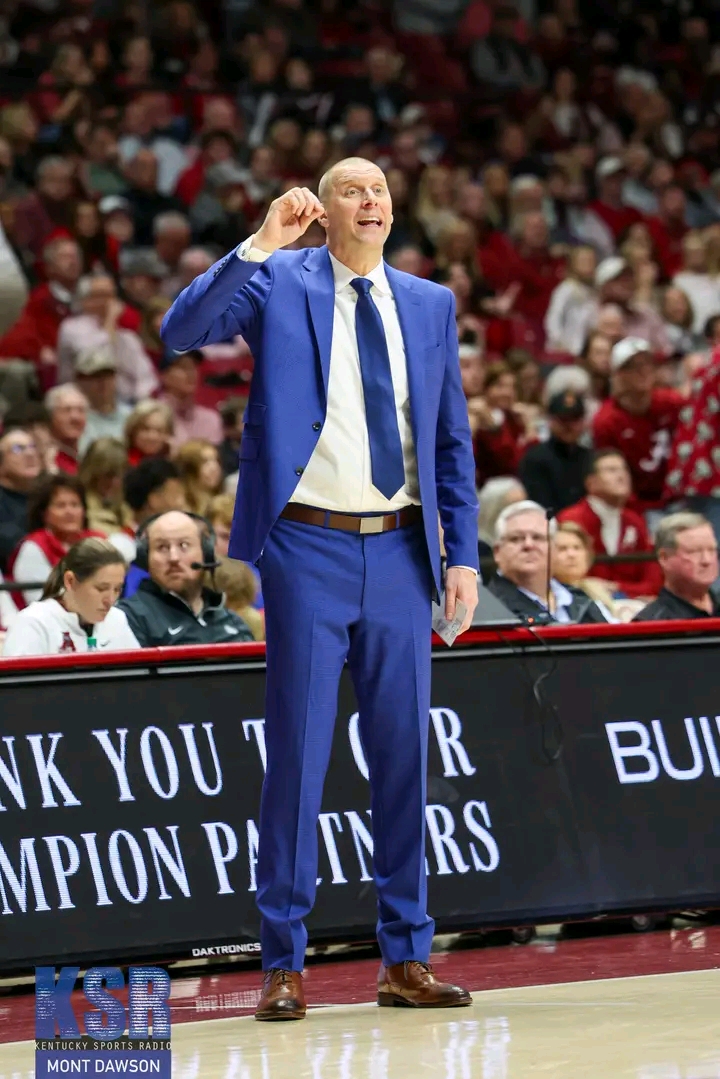
After the game, Mark Pope addressed why Williams’ minutes were so limited. The Kentucky head coach cited a combination of factors, including experimenting with a taller lineup, riding the hot hand of Otega Oweh — who led the team with 22 points — and wanting more assertiveness from Williams when given opportunities.
“We’re searching a little bit,” Pope said. “We tried a bigger lineup that wasn’t very functional today. Otega gave us a huge lift, and there will be ways we can work Kam in. Kam also has to be more aggressive and make the most of his chances.”
Still, the explanation hasn’t fully quieted questions. Williams entered the Alabama game fresh off a stretch in which he had knocked down eight three-pointers across two games and played a clear role in Kentucky’s most effective lineups.
Instead, his impact came too late to matter.
As Kentucky continues to search for consistency, Pope now faces a delicate balancing act. Williams has proven he can be a difference-maker, particularly alongside Kentucky’s most athletic defenders. Figuring out how — and when — to deploy him could play a major role in whether the Wildcats stabilize their season or continue to search for answers.
