


Last season, Kentucky’s repeated failures against Alabama quietly shaped the direction of Mark Pope’s second year in Lexington more than almost anything else.
The Wildcats dropped three games to the Crimson Tide, and each loss felt progressively worse — a tight, high-scoring battle at Rupp Arena, a more decisive defeat in Tuscaloosa, and then a brutal blowout at the SEC Tournament. Those games lingered long after the season ended, even as Kentucky produced one of the most explosive offensive years in program history.
Statistically, Pope’s first season was hard to criticize. Kentucky set a school record for made three-pointers, had six players average double figures for the first time ever, scored over 3,000 total points, and ranked among the nation’s top scoring teams. The Wildcats also returned to the Sweet 16 for the first time since 2019 and stacked eight wins against top-15 opponents.
Yet Alabama exposed something that numbers couldn’t hide.
That reality appeared to drive Pope’s offseason philosophy shift. Kentucky aimed to become tougher, more physical, more athletic, and more defensive-minded. The roster was reshaped accordingly, even at significant cost.
But when Kentucky finally saw Alabama again Saturday night, the outcome looked painfully familiar.
The Crimson Tide controlled the game in Tuscaloosa, building a lead that stretched past 20 points and cruising to an 89–74 win. The loss cemented Alabama’s first-ever four-game winning streak over Kentucky and raised uncomfortable questions about how much progress had actually been made.
What stung most was the contrast in styles. Alabama, led by Nate Oats — a coach once believed by many fans to represent the future of Kentucky basketball — played with pace, spacing, and confidence. The Tide knocked down 15 three-pointers and moved the ball freely.
Kentucky, meanwhile, struggled to generate offense. The Wildcats hit just four shots from beyond the arc, finished with only nine assists, and repeatedly bogged down into stagnant halfcourt possessions.
Roster construction has become impossible to ignore. In the portal era, you can afford to miss on evaluations or overspend — but not both. With a reported price tag around $22 million, Kentucky’s roster feels oddly incomplete. Depth was once described as abundant, but it’s hard to pinpoint a single area where this team clearly excels.
Saturday was supposed to represent a reset. Kentucky was finally healthy. SEC play was beginning. Instead, it felt like a continuation of the same issues — inconsistent effort, limited offensive flow, and no defined identity.
There were flashes recently, particularly in the second half against St. John’s, when Kentucky leaned into defense, rebounding, and energy. That version of the Wildcats overwhelmed the Red Storm. But that lineup never saw the floor together against Alabama, raising new questions about lineup management.
Pope may not have assembled the right mix of players, but his handling of those players has also drawn scrutiny. The Wildcats rarely start their five best options together, and continuity has been elusive all season.
Last year, Kentucky’s roster functioned as a unit. Players elevated one another. There was visible pride and cohesion. This season feels different. Effort has wavered. Confidence has dipped. Instead of pulling together, the team often appears fractured.
Perhaps the most surprising development is how ineffective the offense has become. Based on Pope’s history at BYU and his first year in Lexington, this level of stagnation was unexpected. Ball movement is minimal. Player movement is scarce. The ball sticks. Perimeter shooting is limited, and possessions often end with forced shots late in the clock.
At the midway point of the season, it’s increasingly clear that Pope overcorrected. In trying to fix last year’s defensive shortcomings, too much offensive skill was sacrificed. Coaches ultimately need to lean into their identity — not abandon it.
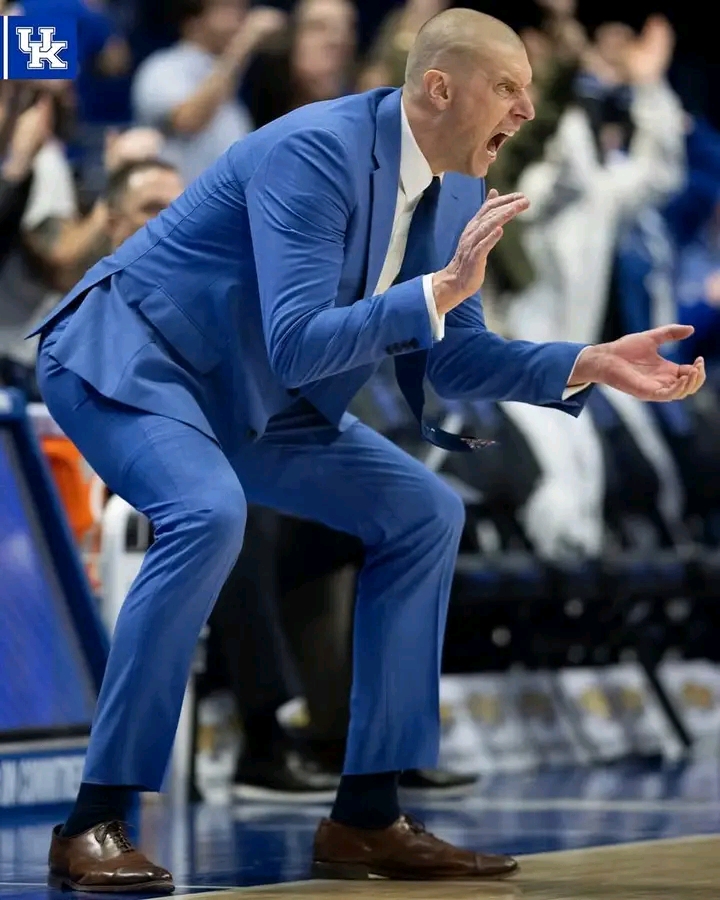
Right now, Kentucky feels stuck between versions of itself. There’s no defining trait, no consistent approach, and no clear direction. Even on the sideline, Pope often appears searching for answers.
Last summer, he compared this team to a Ferrari waiting to be unleashed. As SEC play begins, that Ferrari is still sitting in park.
In the modern college basketball landscape, talent alone doesn’t guarantee success. Every season, expensive rosters fall short because they never become real teams.
And at this moment, Kentucky looks like a prime suspect.
