


College basketball has officially wandered into uncharted territory — and the NCAA looks powerless to pull it back.
On paper, the rulebook is simple: four seasons of eligibility within a five-year window after high school graduation. In practice, that structure is crumbling in real time. Coaches are now combing through every possible gray area to fill roster holes, even if it means pulling players straight out of professional basketball — sometimes in the middle of the season.
Baylor’s addition of James Nnaji brought the chaos into full view. A former first-round NBA Draft pick who logged Summer League minutes and was involved in an NBA trade is now immediately eligible to play college basketball. And Baylor isn’t alone. Oklahoma added a Russian professional center. Utah brought in a Spanish pro guard. BYU dipped into the G League, signing Abdullah Ahmed after more than 50 professional games.
Former coaches aren’t even pretending this is normal anymore.
“We have college basketball coaches right now recruiting guys off NBA rosters,” Mark Gottfried admitted.
Tom Crean suggested it’s only going to escalate from here.
At this point, the line between college basketball and the professional game barely exists. Jeff Goodman reports that schools are already contacting players who have logged actual NBA minutes. When someone suggested we were a season away from seeing an NBA player return to college, Goodman pushed back — it might be closer to a week.
It’s a brutal indictment of the NCAA’s inability to regulate its own sport. But for programs willing to embrace the madness, it’s also an opportunity.
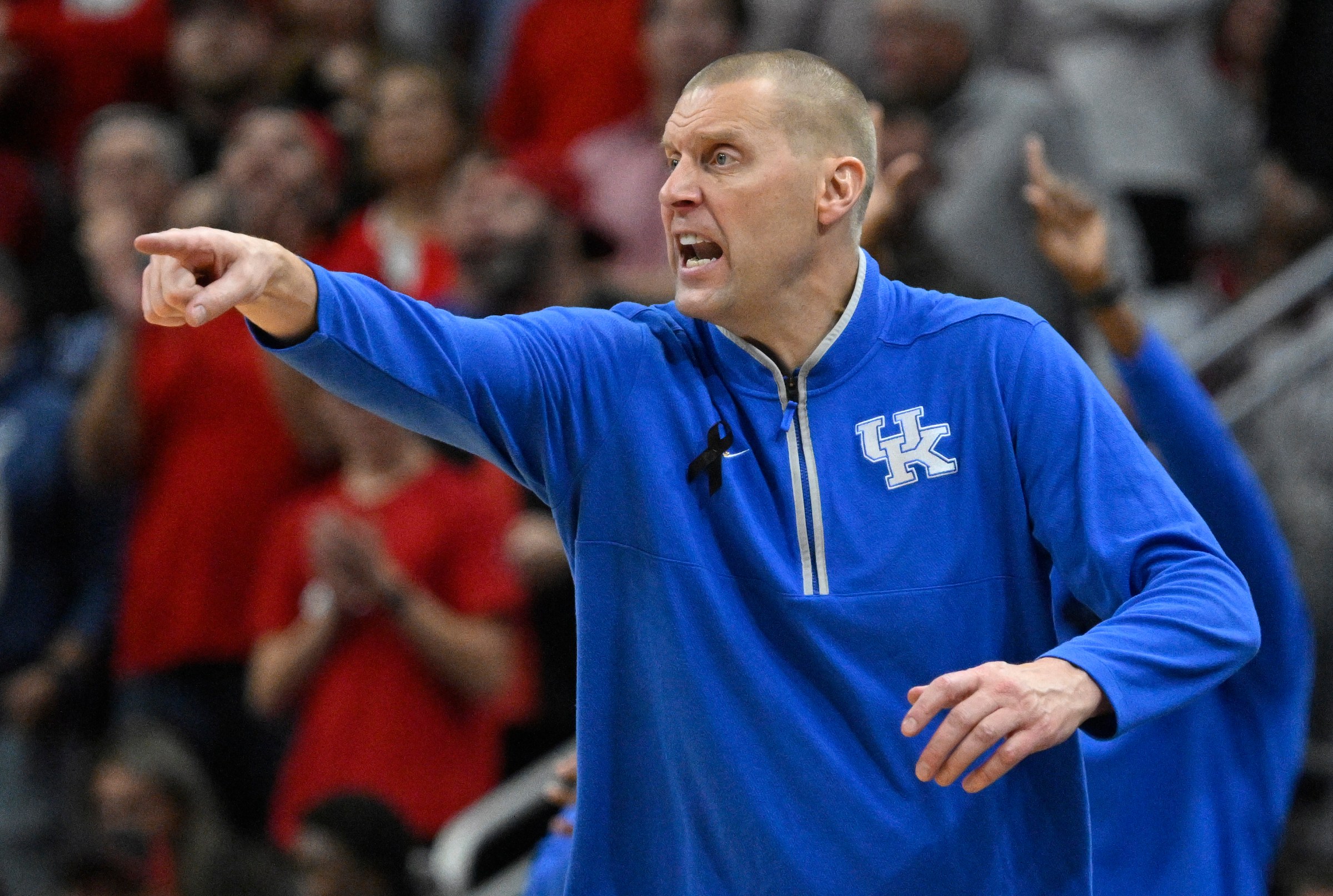
Mark Pope didn’t hesitate to lean into the new era when he assembled one of the most expensive rosters in college basketball this offseason. With injuries lingering and SEC play approaching, Kentucky theoretically still has time to add help. Pope has downplayed the idea of shopping for guard insurance behind Jaland Lowe — but if the rules are truly this flexible, why limit the imagination?
If Kentucky wanted to push the boundaries — and maybe force the NCAA to finally draw a line — here are a few former Wildcats who suddenly don’t feel as unrealistic as they once did.
Oscar Tshiebwe
This entire conversation gained traction because Tshiebwe himself asked the obvious question on social media: if Nnaji can return to college, why not him?
Technically, Tshiebwe has one season of eligibility remaining. Practically, he’s already played 22 NBA games. His five-year clock complicates things — but so does everything else right now.
What needs no explanation is his dominance at Kentucky. Two-time consensus All-American. Unanimous National Player of the Year in 2022. Back-to-back seasons averaging more than 16 points and 13 rebounds. Pairing him with Jayden Quaintance and Mo Dioubate would instantly give Kentucky the most punishing frontcourt in the country.
Ashton Hagans
Hagans’ Kentucky career ended under strange circumstances when the 2020 season abruptly shut down. Since then, his professional path has been a cycle of two-ways, ten-days, and G League stops, totaling just 21 NBA appearances.
He’s spoken openly about how different the professional grind is compared to his time in Lexington — and how special that opportunity was. A return would offer redemption and address real basketball needs, providing experienced depth behind Lowe in a season where ball-handling has been inconsistent.
Kahlil Whitney
Whitney’s case might be the most intriguing. He played just 18 games at Kentucky before leaving midseason, then spent years bouncing between the G League and overseas leagues, with minimal NBA exposure.
Yes, his eligibility window is technically closed — but so was Nnaji’s path back to college, until it wasn’t. Whitney is the same age as Nnaji, and his strong showing in TBT this summer only strengthens the argument that he still has something to offer at the college level.
TyTy Washington Jr.
Finding a former Wildcat who cleanly fits this scenario is nearly impossible — which says more about the current mess than anything else. Still, TyTy Washington comes close.
He’s played 58 NBA games across three seasons, but like Nnaji, he entered the draft early and left multiple seasons of college eligibility unused. Washington averaged 12.5 points and nearly four assists at Kentucky, and his final game in blue — the loss to Saint Peter’s — still lingers. If the NIL money were right, a second chance wouldn’t be hard to imagine.
The entire idea sounds ridiculous — because it is. But college basketball crossed into ridiculous territory a long time ago. If there truly are no rules, someone is eventually going to exploit that reality to its extreme.
Why not Kentucky? And if it leads to banner No. 9 while forcing the NCAA to finally clean up its mess, would anyone really complain?
