


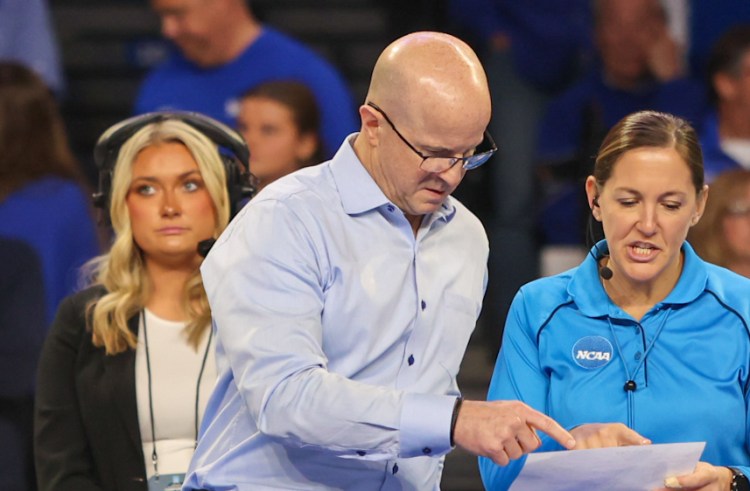
When it comes to sustained excellence at the University of Kentucky, few coaches on campus have matched the consistency and longevity of volleyball head coach Craig Skinner. Year after year, Skinner’s program sets the standard not only within the SEC, but across the national volleyball landscape.
That resume speaks for itself. Skinner has guided Kentucky to nine consecutive SEC regular-season championships, an SEC Tournament title, more than two decades of uninterrupted NCAA Tournament appearances, multiple Final Four runs, and—most notably—a national championship that cemented the Wildcats among the sport’s elite programs.
As Mark Pope continues to build his foundation as Kentucky’s men’s basketball head coach, now entering his second season at the helm, he recently turned to Skinner for insight. On Pope’s radio show, the basketball coach asked a simple but powerful question: how do you maintain such a high level of performance year after year?
Skinner didn’t pretend there was a single, perfect formula. Instead, he pointed to the people around him as the true driver of sustained success. According to Skinner, surrounding yourself with high-quality staff members and players creates a cycle where excellence attracts more excellence. Talented people want to work with other talented people, and that momentum compounds over time.
Early in his tenure at Kentucky, Skinner was intentional about building from the inside out. He focused on consistently recruiting elite setters and liberos—volleyball’s equivalents of a point guard and defensive anchor. By locking in leadership, communication, and stability at those positions, the rest of the roster could be constructed more effectively around a clear identity.
That identity, Skinner explained, is something a coach must fiercely protect. One of the most difficult parts of leadership is saying no—even to great athletes—when they don’t align with the program’s culture or values. Talent alone isn’t enough if it compromises what the team is trying to build.
Skinner also emphasized staying grounded in the present. He highlighted daily effort, defensive intensity, constant communication, and competitive maturity as pillars that allow teams to weather adversity. Championships, he suggested, are rarely won by avoiding problems altogether, but by responding correctly when challenges arise.
For Pope, the message was clear. Greatness at Kentucky isn’t about shortcuts or chasing quick fixes. It’s about building a culture, trusting the process, empowering the right people, and staying true to who you are as a program.
If Pope can apply even a fraction of the principles that have fueled Skinner’s historic run, Kentucky basketball may be positioning itself for something special in the years ahead.
