


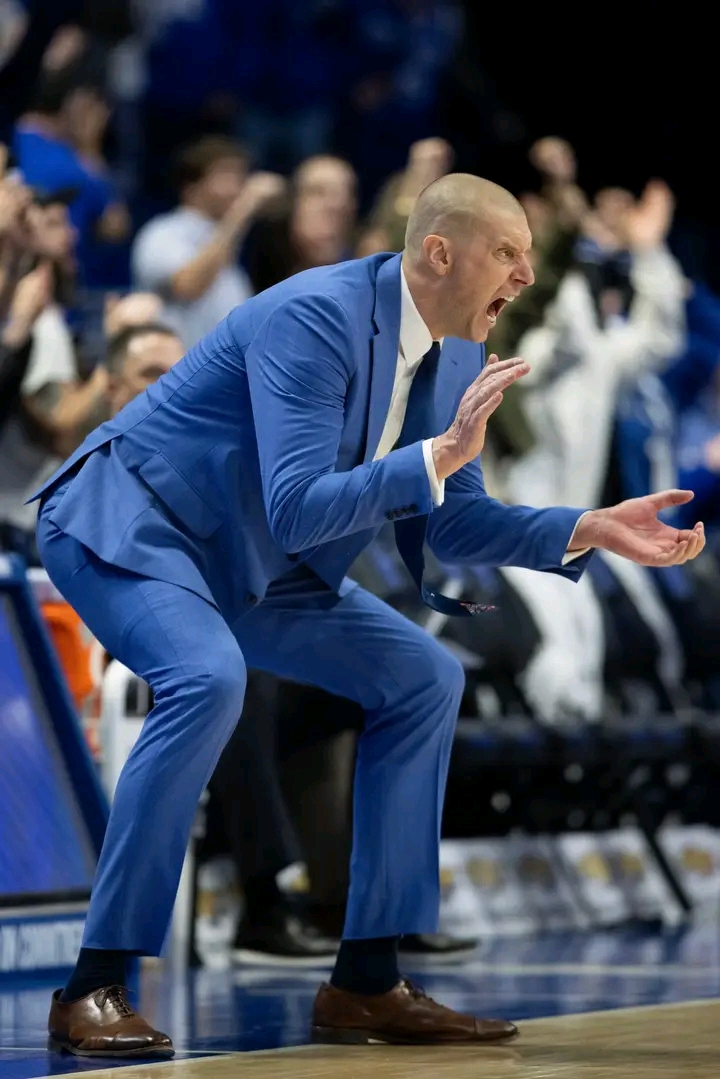
For most of the season, Mark Pope has trusted the numbers.
Lineup data. Efficiency metrics. Substitution models. Even when the eye test screamed otherwise and the fan base grew restless, Pope stayed committed to the spreadsheet. The process, he insisted, would eventually deliver the results.
Against Indiana, something finally changed.
Down seven at halftime and drifting toward another frustrating night, Pope quietly abandoned his usual approach. The second half wasn’t an experiment. It wasn’t a democracy.
It was survival.
Kentucky tightened its rotation, leaned into physicality, and responded with a 40–21 second-half explosion that flipped the game and may have altered the trajectory of the Wildcats’ season.
The rotation shift that changed everything
Instead of the familiar 10- to 12-man shuffle, Pope rode a much smaller group in the second half. Here’s how the minutes played out after the break:
Otega Oweh: 19:41
Mouhamed Dioubate: 13:12
Jaland Lowe: 14:44
Kam Williams: 14:49
Brandon Garrison: 13:13
Denzel Aberdeen: 9:44
Malachi Moreno: 6:47
Collin Chandler: 4:06
Trent Noah: 3:44
That was it.
No endless combinations. No searching for perfect matchups. Pope stuck with the players bringing force, defense, and rebounding — and lived with the results.
The payoff was immediate and unmistakable:
Indiana scored just 21 points in the second half.
Kentucky controlled the glass, finishing with 14 offensive rebounds.
The Wildcats forced 18 turnovers, turning chaos into momentum.
Suddenly, Kentucky didn’t look like a theory anymore. It looked like a team with an edge.
From analytics to instinct
The irony is that Kentucky’s analytics have never been the problem. Even at 7–4, the Wildcats sat inside KenPom’s top 20 thanks to strong efficiency numbers, point differential, and shooting profiles.
That’s been Pope’s defense all along: trust the process, trust the math, and the wins will follow.
Saturday night felt different.
This wasn’t about optimization. It was about feel — who was competing, who was rebounding, and who was willing to make the game ugly.
Oweh stayed on the floor because he was relentless at the point of attack. Dioubate stayed because he turned the paint into a fistfight. Lowe stayed because he pushed the pace and gave Kentucky a downhill presence it’s been missing. Garrison stayed because he protected the rim and finished through contact.
It wasn’t pretty. It was effective.
When asked afterward why Andrija Jelavic didn’t see the floor, Pope didn’t dress it up. It came down to doing whatever was necessary to win.
A turning point or a one-night adjustment?
The obvious question now is whether this was a one-off or a sign of things to come.
Pope didn’t promise permanent changes, and as the roster gets healthier, the temptation to spread minutes will always exist. But the Indiana game created a powerful data point of its own.
When the rotation shrank, Kentucky got tougher. More connected. More purposeful.
If the Wildcats’ season turns around from here, it may trace back to this moment — the night the numbers coach trusted his gut, tightened the circle, and watched a smaller group of Wildcats punch well above their recent weight.
Sometimes, the math matters.
And sometimes, you just have to let your guys fight.
