


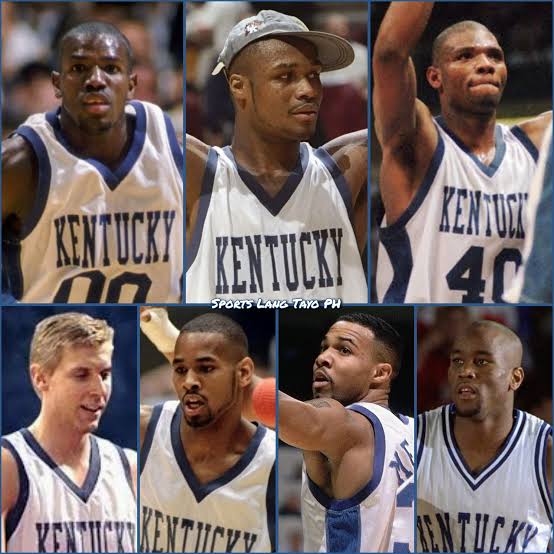
In 1996, the Kentucky Wildcats assembled a college basketball dream team. Nicknamed “The Untouchables,” they stormed through the NCAA tournament with a roster so stacked, many believed they could compete with NBA teams. With nine future NBA players, a Hall of Fame coach in Rick Pitino, and a dominant championship run, the Wildcats weren’t just good — they were legendary.
But then… it ended.
The dynasty never came. The dominance faded. And the question remains:
Why couldn’t the most talented team in college basketball history keep winning?
A Team Too Talented to Stay Together
The 1996 Kentucky roster was loaded with stars:
Antoine Walker
Tony Delk
Ron Mercer
Derek Anderson
Nazr Mohammed
Wayne Turner
Walter McCarty
Mark Pope
Jeff Sheppard
When you have that many NBA-level players on one team, there’s a catch — they don’t stay. Within a year, Walker, Delk, and McCarty were gone. Ron Mercer left the following year. The Wildcats were suddenly rebuilding instead of reloading.
In modern terms, Kentucky became a “one-and-done” powerhouse long before the term existed.
Pitino’s Exit: The True Turning Point
Rick Pitino’s departure in 1997 was the seismic shift that shook the program. He left for the Boston Celtics right after taking Kentucky to back-to-back national championship games (1996 win, 1997 loss). Pitino was more than just a coach — he was the architect. His high-pressure, fast-paced, three-heavy system made Kentucky terrifying.
His replacement, Tubby Smith, inherited talent but brought a different philosophy. While Smith led the Wildcats to the 1998 championship, the style, edge, and intimidation factor the 1996 squad had slowly disappeared. Kentucky was still great — but no longer untouchable.
Ego, NBA Dreams, and the Curse of Stardom
When your roster is filled with future pros, balancing egos becomes as difficult as drawing up plays. Many players on the ’96 team viewed college as a stepping stone, not a long-term mission. The hunger to win was there, but so was the desire to impress NBA scouts and secure draft status.
After the 1996 championship, individual ambition took center stage. Players began chasing personal legacies over team continuity — and you can’t build a dynasty on a revolving door.
Pressure and Expectations Crushed Continuity
Winning a national title doesn’t satisfy Kentucky fans — it raises the bar. Every team after 1996 was unfairly compared to the legendary squad. When the Wildcats lost in the 1997 title game, it felt like a disappointment. When they won again in 1998, critics said it was Tubby’s team, but Pitino’s players.
There was no room to grow. Every season became a referendum on why Kentucky wasn’t as dominant as it was in ’96. That kind of pressure eventually wears down even the most elite programs.
So What Really Happened?
The 1996 Kentucky Wildcats were lightning in a bottle — a rare mix of leadership, talent, and chemistry that can’t be replicated. They were never meant to last forever.
Here’s what ended their reign:
Too much talent, too little time
Early exits to the NBA
Pitino’s departure to the pros
Shifting coaching styles and strategies
Sky-high expectations and mounting pressure
They weren’t a dynasty — but they didn’t need to be.
They were perfect, once.
And sometimes, that’s more legendary than anything else.
